Showing posts with label Writer - Karl Fischer. Show all posts

Wednesday, August 31, 2016

Bad Art Contest: Round 2

by Karl Fischer
with special guests S.T. Cartledge and Brent Millis

And now, for your viewing pleasure, the second batch of submissions to our horrible art contest. You love it, you filthy swine!


BATHAGEDDON
by Katherine Parker

"Every good bath comes with a little mayhem, and this one’s got it all.  Angry sea serpents, evil jelly fish, tentacles with chicken pox, alien abductions,  and, of course, a continental cotton candy baby are all waiting for you, all you have to do is step outside and give a wave."


A Kong Without a Kingdom

by Eirik Gumeny

"Where does a kaiju go when there are no more cities to smash? What does a giant monster do when the country homes have all been waylaid? When he has vanquished all that stood before him, when there is nowhere left to stand, what then?"


Bender Vs. Zoidberg
by Matthew Vaughn

"Bender and Zoidberg are freaking huge and destroying the city. Why are they so big? Who knows, but I bet you it has something to do with Dr. Farnsworth."


Untitled
by David Atkinson

"eerie silence"


Tuesday, August 16, 2016

Bad Art Contest: Round 1 and Special Guest Update

by Karl Fischer
with special guests S.T. Cartledge and Brent Millis

Since our announcement last week, we've added a third participant to the Bad Art Contest: Brent Millis and his kaiju porn-parody "Rodzilla Respurgence." We've received three submissions to the bad art contest. Three eBooks to give away. Three contenders for the grand prize. If I weren't on my meds, I'd say it's a conspiracy.

Reap what our contest has sown:

In the Kaiju's Cunt
by Jon James 

Artist's statement:

"In the Kaiju's Cunt" is a digital painting that explores the depth that humans will go to in seeking satisfaction. This depth is illustrated literally, as the godzilla-esque creature penetrates her vagina with a man-made structure.

In the piece, the observer is both the kaiju seeking pleasure, and the countless humans implicit in the background whose lives are destroyed in the pursuit. The digital, finger-painting style creates a juxtaposition of the primal and the technical, both cast aside as failures in the nihilistic race to happiness.

Ultimately, though, as the viewer already knows, and the giantess will soon learn, all joy is ephemeral; the buildings that stimulate her crumble and burn in her grasp.


Revenge of the Six-Hundred and Twenty-Seven Foot Wolf
by Caleb Wilson

Artist's statement: 

Wolves make good monsters, I think because (unless we're ranchers or farmers) we sort of like and admire wolves. They're not doing anything wrong, snapping and howling and ripping flesh, they're just being themselves. I'm not sure of the backstory of this giant wolf, but the title hints that its destruction of this city is probably justified, and I'll confirm that it it totally is, and that we are allowed to enjoy it from afar.


Cthulu's Sister
by Kalr Dark

Artist's statement:

She, like Cthulu, loves to drive people mad and very rarely let's people get away. Unlike her brother, she uses her sexiness to lure people in and the "friend zone" technique to drive people insane, until finally eating them as a snack or stealing their soul as a knickknack. 

Tuesday, August 9, 2016

Bad Art Contest: Giant Monsters, Robots, and Kaiju

by Karl Fischer
with special guest S.T. Cartledge

Everyone loves giant monsters and things. If they say they don't, they're fucking liars. Another thing that people love is crude, ridiculous artwork. Like this:


See that? That's the fucking Mona Lisa. Do you have any idea how much people will fork over to see that thing in person? It's a lot. The Mona Lisa is a French icon, and the French invented cream and fried potatoes, so they're not exactly smashing rocks together.

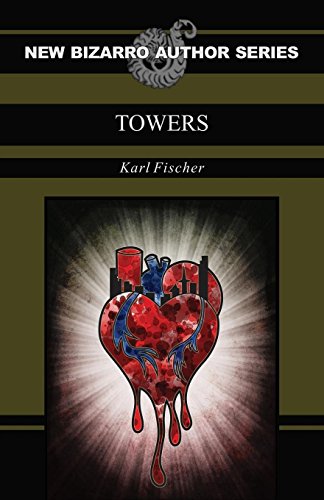
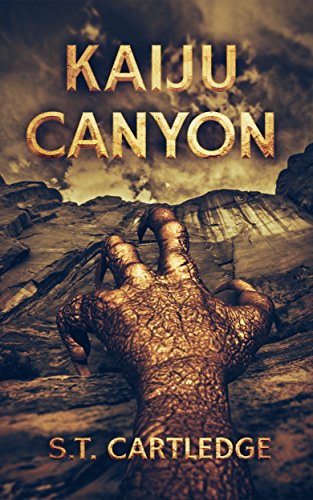
The point is, anyone can be an artist, and everyone wants to draw giant monsters for a living. Now, I can't afford to pay people to draw giant monsters, but what I CAN do is give away books. Specifically, me and Australian author, S.T. Cartledge, will give away copies of our giant monster books, FREE, to those who participate. That's right, bungholes. For one piece of artwork, you can now receive two books in digital format: TOWERS and KAIJU CANYON.

How to Participate:
From now till the end of August, all you have to do is send an ORIGINAL, horrible piece of artwork to everybodyco@gmail.com. It can depict anything, so long as "anything" constitutes a giant monster, giant robot, or some other mysterious, gargantuan creature wrecking havoc. Be sure to include a title and an official artist's statement. Once submitted and scanned for copypasta, your contribution to the visual arts will be featured on the blog and you will receive both books in whatever digital format you desire (please specify).

Not only that, but at the end of August, one lucky participant will be chosen by Shane and I as the best of the worst. This individual will then receive a giant monster goody bag filled with splendors and surprises. We might even throw in this piece of gum! When submitting be sure to include BAD ART CONTEST in the subject line.

About the Books:


Towers, by Karl Fischer

When we are locked inside ourselves, nothing outside could be worse.

After fighting giant monsters for a thousand years, a sentient guard tower is set to go to heaven with his soulmate. But for reasons unknown, the lovers are reborn as lowly humans living inside the Towers they once operated. Separated by thousands of miles and trapped within menageries of horror, only a profound transformation of mind and body can reunite them.


Kaiju Canyon, by S.T. Cartledge

When a hunting expedition goes missing during a freak earthquake in the Australian Outback, the Alice Springs Police Department sends out a search team to find the missing hunters. Instead, the rescue party discovers a newly-formed canyon in the heart of the Outback. 

Nothing could have prepared them for the horror that awaits them as they find themselves besieged by gigantic flying monsters and mutant lizards. 

Kaiju Canyon is an action packed journey into primordial terror, where every step you take may be your last. 

Monday, May 9, 2016

Where Are They Now? Interview with Eric Hendrixson

by Karl Fischer

Eric Hendrixson began his career as a not-so-humble member of the Magnificent Seven, the 2010-2011 New Bizarro Author Series, which has become the stuff of legends.

Pictured here killing varmints.

In celebration of Eric's latest novel, Drunk Driving Champion, a bizarro racing adventure evocative of The Gumball Rally and Cannonball Run, I reached out to Eric for a heart-to-heart regarding his escapades.

Let's start with the basics. Tell me how you found Eraserhead Press and/or bizarro fiction in general?

I went to a class on publishing fiction at the library. The instructor worked in fantasy, so she focused on knowing your genre. But I didn't have a genre. I was always the odd man in any writing group I belonged to, and none of the publications out there seemed to publish what I was doing. So after the class, I tried to talk to the instructor about the kind of fiction I wrote, and she said, “Well, I guess you're just bizarro.”

I muttered, “Yeah, thanks,” and left. I don't believe most things people say and assumed she was just fucking with me. I'd done a lot of reading and writing, and I was pretty sure there was no such thing as "bizarro." Still, I spite-Googled it a couple days later and bought the first two Bizarro Starter Kits. The first story I read was The Greatest Fucking Moment in Sports. After picking up a few more books, I knew I wanted in on this. Imagine being a devout Catholic all your life without knowing the Catholic Church existed. Then, one day, while out shopping for printer toner, you stumble into Vatican City. That's what finding bizarro was like.

Back then, there was a questionnaire that Eraserhead had you fill out to see if they wanted to work with you. I filled out the form, and I guess they were willing to work with me. And specifically, it was Donihe who wanted to work with me, which was a big deal because he's the one who got me into this genre. My application was accepted, and somehow, I didn't feel like they were fucking with me. So I wrote a novella for the NBAS, which was rejected (it really was just cyberpunk), and I went to BizarroCon, where I met the bizarros, the first generation of NBAS, and Michael Allen Rose, who was in the NBAS class after me.

We've interviewed Michael Allen Rose before and talked about his unending font of masculinity. Do you feel any kind of generational connection to the rest of the Magnificent Seven or subsequent NBAS groups?

I think of each year of NBAS writers as a graduating class, so there's a community of sorts among people who have had this common experience. It's like a college alumni association except that it doesn't ask you for money, send out newsletters, or officially exist. I was fortunate in moving to Chicago, since we have four NBAS graduates in this city.

How did your year in the NBAS go and how has it affected your career leading up to Drunk Driving Champion?

I started off writing a story about a narcoleptic disc golf player who fights an army of Rickrolling squirrels who turn the White House into a giant Rick Astley. I'd just gotten back from my first BizarroCon and was eager to get this story on paper. It was also November, and I had done NaNoWriMo before, so I got started. The problem was that it was a really dumb idea for a book. It was obviously just wish-fulfillment, so I stopped writing it. In an online workshop with Bradley Sands, I came up with the idea of a doughnut shop worker and his kiwi fruit girlfriend selling human faces around Washington, D.C., while dodging a Michael Jackson-impersonating hit-tomato. That made a lot more sense, so I wrote that book instead. Then I lost the book. I went to a cheap motel in Natural Bridge, Virginia, and rewrote it over the course of a few nights and revised it with Kevin Donihe over a couple months.

Back then, NBAS was more competitive. My NBAS class worked together a lot and supported each other, but it was still stressful. There was a set number of books you had to sell—hard copies, not e-books—to be even considered for future submissions. I think it was a period of character-building. I learned a great deal about marketing, more about what doesn't work than what does. However, selling a book is more than just writing a book, and the year changed a lot of my thinking about writing. Jim Koch, the founder of the Boston Beer Company, once said that there's only room on your coaster for one beer. I'm assuming he meant at a time. Similarly, at any given moment, for a person to be reading your book and not any of the other books out there or that have ever been out there is a pretty big deal. You have to make it worth the reader's while.

Given the short format of the NBAS, how did you convince people to put a little beer on their coaster instead of a big one?

If you have small glasses, serve whiskey.

Tell me about Drunk Driving Champion - the process of writing it and getting it published. Was it always your intended sophomore release?

I pitched this book as a joke. Drunk Driving Champion came out of a month-long anonymous online pitching session with a bunch of Eraserhead authors and editors. It was essentially a pitch workshop gone bipolar. Because of the way the message board worked, all of our ideas either got shut down or were simply ignored. The pitches most recently commented on went to the top while those without comments were buried. That's also how 4Chan works. We'd spend days on a pitch to just get a "nah" or "meh" from the group or for things to be buried and not ever read or voted on at all. In the second week, everyone started getting a little testy. I mostly vented by attacking my own pitches, using language I would never use against someone else. I was getting pretty surly. So full of frustration and beer, three hours after bedtime but ten minutes before bed, I threw together three pitches called "Chainsaw Nunchaku," "Fuck Fucks the Fucking Fuckers of Fuck," and "The Great American Beer Run," which became Drunk Driving Champion. When I woke up, the beer run story had caught on. It was really popular, and Eraserhead accepted the pitch.

So I had to write it now, but as I wrote this story, the characters became very real to me. Because of the risk involved, a person has to have a good reason to participate in a cross-country drunk driving race, so I worked on each character's personality and motivation and let that be the driving force for each character's story. That was something I learned from reviews of Bucket of Face, how people responded to the character-driven plot. That allowed each racing team to have its own story arc. There are no auxiliary characters except for victims along the road, and even they have to be real. Each character in the story deserves a story. I also built on the faster voice that I was developing in Bucket of Face. Don't waste the reader's time. Make things happen. Always escalate. So there was a balance between developing the characters and always moving the action forward.

It's a thing of beauty when a farce turns honest. Tell me about your favorite character in Drunk Driving Champion.

I like characters who act as the voice of reason in unreasonable circumstances. Anita, William's A.A. sponsor, accidentally gets dragged into the race when she gets into his car at the starting line to stage an intervention. After offering support, encouragement, and A.A. slogans for miles, she starts to lose faith in her mission. This is used both to comedic effect and as a form of character growth. Her failure as a sponsor allows her to question a lot of the roles that she's been pushed into, stop being a sidekick, and take the lead role in her own life. There are a lot of characters in the story who are crazier than she is, but she's a sane person in an insane situation. She'd be better off if she were a lunatic.

If you were in a 70's racing sex farce, what would your character drive and would he stand a chance at making it to the finish line?

I'd drive a goat-drawn wagon. It wouldn't be drawn by ordinary goats but by disco goats. My disco goats and I would get to the finish line with the power of music and friendship. Or a Dodge. They made a pretty solid car back then, and you could fit a couple goats in the back seat or the trunk, depending whether or not those damn goats can fucking behave themselves for once. Also, instead of Sally Field, I would have Sissy Spacek as my co-pilot because I think she's a damn good actress. Did you see her in 'night Mother? That was some solid work, and I think that's the kind of person I would need riding shotgun.

And I'd want a shotgun.

I have not seen 'night, Mother, but then Bradley Sands would argue that I've never seen any movies. Is Drunk Driving Champion satirical or absurd?

The ultimate purpose of satire is to preach to people by pointing out their flaws. I think one of humanity's largest flaws is preachiness, so I try to avoid writing too much satire. There are satirical parts, mostly making fun of preachy people, but it's not the book's overall purpose. National Lampoon's Deteriorata and We Drive Drunk by Rucka Rucka Ali are parodies that transcend the subject matter, but most satires and parodies don't. I'd say the book, like most things, is absurd, but absurdity is not randomness. Absurdity has a logic of its own.

What do you have in store for us in the immediate future?

Giving the Finger was in the Bizarro Starter Kit Red, and being in a Starter Kit was one of my goals going into the genre. I'm working on assembling a collection with that story as the tentpole. Essentially, the piece is a retelling of the Little Dutch Boy story. Once the boy has stopped the leak in the dike with his finger, the town has no real incentive to let him take his finger out of the hole. The leak is stopped. And when new leaks spring, it only makes sense to take more body parts from the boy for repairs. I had a lot of fun with that one.

I've always been a fan of anti-comedy, so I wrote a sort of anti-horror novel, a zombie story without zombies, which is on Kevin Donihe's desk right now. As a part of the world-building process, my novels usually have an underlying cosmology. Charles from Bucket of Face was a Fifth Day Philistine. Drunk Driving Champion has an afterlife involving reincarnation and the void. This novel, which will either be called Precious Blood of the Lamb or All Our Future Thursdays, works on a modified Last Thursdayist worldview involving tacos, Thursday being the fifth day and tacos being amazing.

I think "All Our Future Thursdays" is a beautiful title. I'd like to hear a little bit more about that, if you can tell me.

It's the usual boy meets girl, boy loses girl, boy dies, boy tries to win girl back, boy turns into a sheep, boy looks for tacos, girl dies, boy raises girl from the dead, boy accidentally turns girl into a sheep, boy destroys the universe looking for tacos story. And he does this kind of thing all the time, which is probably why the girl dumped him in the first place. I know this description sounds like a typical romantic comedy, but I tried to put an original spin on it.

Last question. If I told you that you had a beautiful body, would you tell me how to live one's bliss?

You would never say that.


Sunday, April 17, 2016

Monsters Review Monsters: "Pacific Rim"

L:  Hello, I have many names, but you may call me Leviathan. I am the End of All Material Things, the Final Nemesis, and an amateur movie critic. With me is Quatra, a West Atlantic Defense Tower measuring approximately 985 feet in height and carrying an 878,000 megaton explosive yield nuclear stockpile. She also enjoys movies.

Q:  Hello, everyone!

L:  In recent years the so-called giant monster genre of entertainment has seen increased popularity. More than ever, puny humans with incomprehensibly brief lifespans are becoming fascinated by tales of kaiju and other large monstrosities ravaging the Earth.


Q:  Such interests also cross the mecha, cosmic horror, and mythological fantasy genres, but regardless of title, these works all have, at their core, an antagonist of astounding size. And given that Leviathan and I are both entities of astounding size, we thought we could offer a unique perspective on the books, movies, television shows, and games that feature "strange beasts."

L:  We're going to start with something relatively new and popular, the historical drama "Pacific Rim," directed by Guillermo del Toro. The story is set during the final years of mankind's dominance over their birth world as they struggle to survive an onslaught of kaiju, which emerge from the bottom of the sea. Cities are destroyed, millions killed, and though the Sons of Adam are successful in developing new weapons forged in their own image, the monstrous invasions grow increasingly frequent and destructive, with no end to the violence in sight.

Q:  Let's talk accuracy, because that was a huge stumbling block for me. In typical fashion, Hollywood has completely glossed over history in order to tell a more streamlined, "action-packed" story. The first mecha gargantua weren't even born until AFTER the Wall of Life program was instituted. We're talking a thirty year gap here - a pretty significant chunk of history that includes the Akira Incident, the Third Impact, and confrontations with Dagon. 

L:  History, in the human sense, is an entirely fallacious concept. I tried to focus on the film's thematic progression and its handling of the story arc overall. I did think they were a bit heavy with the exposition, though.

Q:  Also, the kaiju in this movie are tiny. Seriously, look at this chart: 

Those tiny black silhouettes are the kaiju from the movie. The bigger, grayer ones represent the creatures I fight almost every single day.

L:  Eons ago, the Nephilim walked the Earth, and though they had many slaves, they were hunted by still larger entities - luminous beings which could blot out the sky with their mass. Grandeur is always relative.

Q:  The fights were pretty rad, though.

L:  Yes, let us discuss the bloodshed.

Q:  I haven't lived as a human in centuries, so I find it difficult to empathize with fleshy consequences like dismemberment and melting skin, but I did find the plight of the jaegers - the giant robots employed against the kaiju - to be a very compelling aspect. 


L:  I am a manifestation of the sea, and though countless waves will break upon the shore, my assault is unrelenting.

Q:  Exactly. What we have here is a war between robotic slaves and a race of twisted alien simulacra, bred to kill from the moment they're born. As a living defense Tower that spends her days engaged in long-distance bombardment of enraged biomechanical beings, that really spoke to me. And I think that's the beauty of historical fiction - its ability to transcend time by portraying struggle as a universal and timeless facet of life. Its eerie how closely the distant past resembles the present.

L:  I too felt time that time and place were being transcended, though more specifically in the way this film entirely resembled "Independence Day," directed by Roland Emmerich and starring Will Smith.

Q:  Well, it's true that both conflicts were resolved with the use of tactical nuclear warheads - a solution I am not unfamiliar with. 

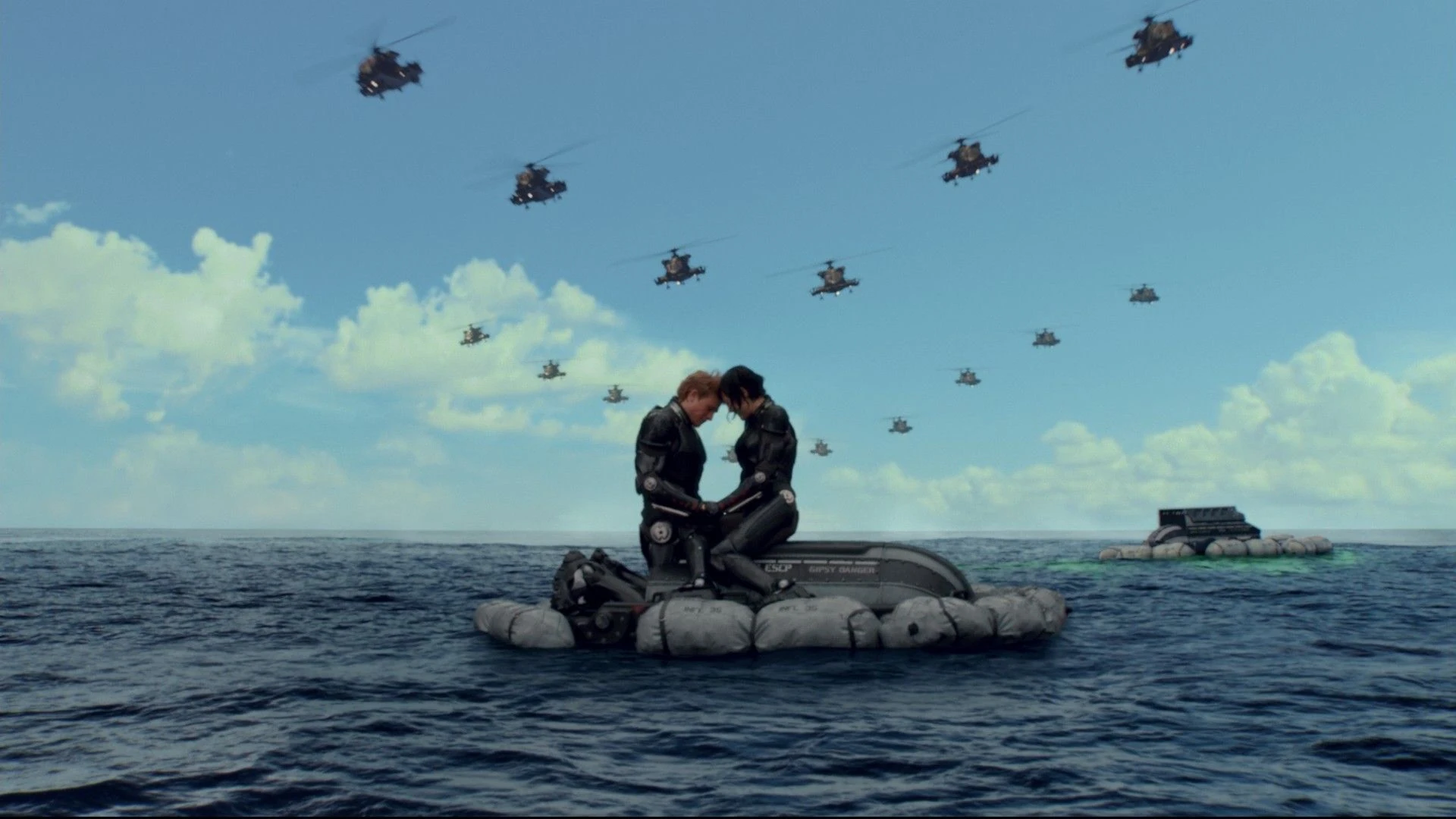
L:  Wholesale destruction of famous human landmarks, alien invaders, a species on the brink of extinction, scientific hubris, environmentalist overtones, a rousing speech by a war veteran, utilizing subterfuge to breach an otherwise impassable barrier, a look of recognition and terror on the face of the Other as they greet their annihilation, a non-provocative hug between romantic partners at the film's conclusion...

Q:  Romantic partners? What romantic partners?


L:  Our protagonists Raleigh and Mako. Mako was caught staring at Raleigh's naked torso. They had an innuendo-laden sword fight. They were Drift compatible, implying compatibility in other ways. She begged him not to leave her alone when she thought he was dying.

Q:  So, what, just because a man and woman are on screen they have to fall in love? Maybe their Drift compatibility allowed them to bypass mere infatuation and arrive at a deeper connection that's wholly platonic, which might be why things seemed more playful in the beginning but less so after they Drifted. Love isn't all about the desire to bone. There are many kinds of love.

L:  I am the Antithesis of Life and Love. It is my entire purpose to bring an end where there is a beginning. I am Death, which severs all human emotion forever.

Q:  But love isn't an emotion, Leviathan. It's a connection. Emotions come and go, but love transcends us. Although I think it's silly that one measly 250 foot robot would require two human minds to operate, the implication is that connections can overcome even the most frightening levels of adversity. My partner, Alti, is also a Tower, and we wouldn't be able to do what we do - fight for a thousand years - if it wasn't for our bond. The promise that, no matter what, we'll be together. 

L:  I do not wish to hear about your husband and his anxiety problems again. Overall, as an ageless and unknowable entity, I give "Pacific Rim" 3 stars out of 5. A solid action movie. Strong visuals with an uninteresting character arc. Ultimately satisfying if largely forgettable.

Q:  Hmph. I give it 4 out of 5 stars for its subtle undertones, masterful use of color, and excellent fight scenes. I could have done with better performances from the main actors and more historical accuracy.

L:  If you have a suggestion for the next giant monster related item we should review, let us know in the comments. And be sure to check out the novel "Towers," by Karl Fischer, which includes my co-host Quatra and a cameo by me, Leviathan, the Enemy of Man.

Q:  Till next time!

 Buy Towers on Amazon

Monday, February 29, 2016

YouTube Curation: Teddy Has an Operation

by Karl Fischer

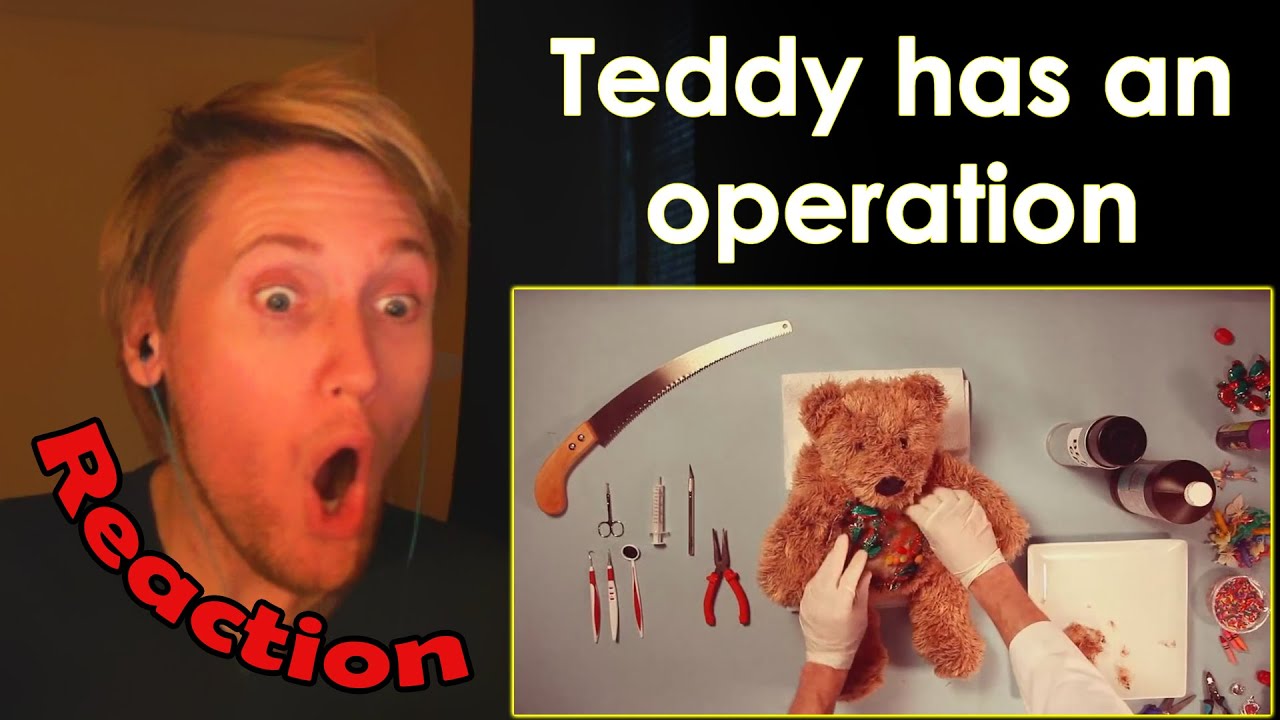
There's a video called Teddy has an Operation, which you may have heard about. Its creator, Zefrank1, is best known for Sad Cat Diary, Sad Dog Diary, and the True Facts series, all of which are animal themed and comedic in nature. Teddy Has an Operation, which has the second most views of any of his videos, is something else entirely. 


In the video, a teddy bear undergoes an operation to fix whatever condition is ailing him. The doctor cuts him open one layer at a time and addresses each problem that he encounters. Meanwhile, Zefrank1 narrates the proceedings in his gentle, over-enunciated, ambiguously accented voice.


The first time I saw the video, I wept. I just blubbered uncontrollably, fat tears rolling down my face. It's worth noting that I was going through a profoundly difficult period at the time, but the sadness that the video elicited was almost sublime. So much pain and yet it was so goddamn beautiful.

While the video has generated almost 17 million views, the majority of its audience seems to have ignored any potential nuance and gone straight to, "Ewww, are those REAL organs?!" Yes, gentle Youtube simpleton, those are real organ meats that he is cutting into. Now shut the fuck up and let me explain why this is a beautiful portrait of anguish and not just shock fodder for your fucking reaction videos.


How about you just eat a big old bag of dicks instead, you fucking parasite
Teddy is a person rendered as a childlike object. His physical operation is an abstraction of the mental processes taking place. Teddy's Bonbon Layer, the source of his sweetness, is filled with "unhealthy" bonbons. His Play Pouch is almost depleted of sprinkles. What we have is a bear who self-medicates. His depression is running him ragged, unable to play, unable to truly enjoy things. The doctor can treat these symptoms by removing the bad bonbons and adding more sprinkles, but the underlying cause behind all this must be identified.


The veneer of the plaything is stripped away and Teddy's viscera is laid bare. We come to his Crotch Unicorn - the manifestation of his imagination and sexuality, which are intact. The doctor says this a good sign indeed, for Teddy probably has a significant other. Sexual dysfunction in a relationship where a partner is struggling through mental illness is no goddamn joke. Teddy's gangrenous Kidney Crayons are then removed, allowing him to experience empathy for others once again, instead of just feeling sorry for himself. His Courage Sack is opened and we find it riddled with fear. Teddy is afraid, and the only cure is to transmogrify this fear into a more helpful motivation - curiosity. It is here that the unusual juxtaposition of tone and imagery begins to crystalize, forming the portrait of a sick and anxious patient. It is not absurd, but melancholy, mindful.


The last thing we come to is Teddy's Heart. Before seeking treatment, Teddy likely doubted his own authenticity as a sensate creature. Irrational fear does horrible things to a person and can take on a life of its own. Backed by depression, anhedonia, and loss of empathy, relentless fear tells the mind that the good feelings it seeks are not genuine, that it has no love, that it never did. It was only ever a construct, one that was kept alive by coincidence and circumstance. And now, that circumstance is gone, says the fear. This is who you truly are and what you are meant to experience. Forever.  

Teddy's Heart is undeniable proof that the fear is wrong. "Look how big it is," says the narrator. "Look how much love Teddy has." Contrary to his fears, Teddy harbors an abundance of emotion. And at the center of all that emotion and love, his Heart's Heart, broken by a Bad Boy, as the doctor reveals. "What did the Bad Boy do, Teddy?" opines the narrator. "Oh, Teddy." The why of it all is not important, only that a catalyst was buried deep inside, left to fester and rot. In itself, the Bad Boy need not represent heartbreak, or even a person. Memories and thought processes build a tower inside us, and can grow crooked, sometimes losing support and causing great damage. Memories cannot be replaced, but the unhelpful thought processes which promulgate suffering can be, as is with Teddy when he is given a "new child" to love.

The operation is pronounced a success. We end with Teddy in a hospital bed, stitched and dressed in bloody bandages. The narrator says goodnight, sweet and sorrowful. Teddy will be alright and so will we.

Sunday, February 21, 2016

Towers - A review

Towers – Karl Fischer


“We were Towers and we shattered the sky.” So starts Karl Fischer's Towers. It sounds like a lyric or a line from a poem, doesn't it? Well keep that in mind, my little curious one, because that's what this book is, a massive love poem.


The basic plot is after a thousand years fighting giant monsters as a massive sentient tower, our hero, Alti, hopes to be reunited with his love Quantra in some sort of eternal paradise. However, once his thousand years is up Alti is dismayed to find, instead of paradise, he is once again just a human within one of the gigantic towers. He then sets out on a homeric odyssey to be reunited with Quantra and spend the rest of their mortal lives together. And homeric is right, this is an odyssey, not just on the journey that Alti endures but through his own physical transformation.


This, for me, appears to be the central question Karl is asking: what would you do for the one you love? How far would you go? It is this emotional question, and Karl's response and thoughts on it, which drive most of what's interesting about this book. In the end, this is a long epic love poem – look, my love, look how far I will go, how much I will endure, how much I will sacrifice, my world, my religion, my friends, even my body. You can't help but love someone who is willing to show his emotions like that.


As I said, this is a poem, and it stands or falls on the reader coming to terms with that. Do all the images hit home, not for me, but most of them do and that is enough. Some of the imagery I found confusing (that's probably a consequence of the speed I read it at) and some of the secondary characters were a bit hit and miss for me. But in the end, the main character of Alti and his emotional roller-coaster is what pulls you through.


So, all in all, my little curious one, do we recommend this book? Yes, you should read it. Karl is trying to tell you something important. We all start as Towers, emotionally separate from each other, and then as we grow and change and metamorphose we become powerful and vulnerable at the same time. We cry out for someone just like us, our own breed of monster, and if we're very lucky we may just find that someone who is a monster like us because in the end we're all monsters for the ones we love.

Towers-Karl-Fischer

Wednesday, December 16, 2015

YouTube Curation: What Monsters May Come

by Karl Fischer


I was approached by my editor, Garrett Cook, with a special assignment: "Write a piece of flash fiction[...] and read it as your pug rampages across some wargame scenery. Film this." I hadn't made a film since before I could drive, but having more than once considered exploiting the dog's cuteness for fame and profit on YouTube, I decided that this would be a splendid project. "All in all, it's maybe two hours work," continued Garrett, in what I would now call a laughably optimistic calculation (either that or he had something a little more "gonzo" in mind).


Considering that I had only Windows Movie Maker, a smartphone, and a headset at my disposal, I'd say the final product turned out significantly less shitty than one might have reasonably expected. Actually, it's amazing what you can produce with a little ingenuity and some cheap technology. The "wargame scenery" that Garrett references indicates that he thinks I'm a giant Warhammer 40k nerd. I mean, I WAS, but I certainly never had my own tabletop scenery. It would have been nice, though. So, I went with the next best thing: nipple-topped chess pieces from my Cow Chess Game. 

Honestly, getting the pug to "rampage" through my little cardboard and cow udder prop was a greater challenge than anticipated. Dogs are never bashful about getting all up in your shit when it's least convenient, but if you've planned for it, somehow they've got better things to do. Below, you will find some unedited footage regarding this phenomenon.


There were THREE milkbone pieces in that city. What is her fucking problem? Anyway, making movies takes a lot of work, even when they're only 2 minutes long and purposefully crappy. But I loved the whole thing and you can bet I'll be making more.

Tuesday, December 8, 2015

The Sad Bizarro Guide for Seasonally Affected Weirdos

by Karl Fischer

The holidays can be a stressful time. They can even feel like the end of the world. Yes, as civilization crumbles and people are reduced to feral beasts that go screaming into the night, tearing apart cities with their frustration and guilt, you might wonder if shopping for your loved ones is even worth it. Well, this gift guide wants to assure you that it is. It’s okay to feel sad. You can still have a very merry holiday season.

"Skullcrack City" by Jeremy Robert Johnson

Beautifully written, superb, and insane, JRJ’s first full-length novel tells the story of a mysterious drug sensation, which is threatening to drag all living things into an outer-dimensional hell, a place where existence is quashed under an endless black nothing. Our drug-addled, banker-turned-outlaw protagonist must battle monsters from beyond the veil of rationality, but saving the world may come at a very high cost. It’s paced like a thriller and deep as the Bolton Strid.


"The Cell" - Tarsem Singh

New technology allows therapists to enter the minds of their patients, making it possible for them to physically confront fears and memories. Unfortunately for Jennifer Lopez, her next client is a serial killer. Tarsem Singh brings his stunning, signature visuals to a tale of depravity and mental trauma. It's maybe the tenderest story ever told about defeating a serial killer—you won’t find any smarmy Kevin Spacey lookalikes here. It takes a lot of courage to overcome the demons that can inhabit a mind.


"Blueprints of the Afterlife" by Ryan Boudinot

The world has already ended, and it is in the political, spiritual, genre fictional, and emotional Afterlife that the novel is set. Across time, a disparate cast of characters act out their roles, a winding spiral of events—sometimes violent and melancholy, other times humorous and absurd—that coalesce into the final testament of the human condition, the artifacts that will be left behind for the Last Dude.


"The Fountain" - Darren Aronofsky

Set in the past, present, and future, one man searches for the metaphorical and literal Tree of Life. His loved one is going to die/has died, and he is desperate to prevent/understand/reverse it. Is it death that elicits fear, or the cessation of all things that accompanies it—that final sundering of emotions and cares and wants? To what lengths would you go to overcome that gaping maw at the end of your happiness, which swallows up everything like a collapsed star? The film’s answer is that love is greater than death, and though we are ephemeral, perhaps it is not.


The Stanley Parable

Stanley may or may not have freewill. Stanley may or may not be trapped in a recursive, meta-fictional nightmare. His fate may or may not be in your hands. The voiceover narration serves as the primary point of conflict, highlighting the unique gulf that exists between author and audience, even in an interactive medium. There are many different endings that can result from your choices, but you'll want to explore them all in order to see what's really going on.


Neurological Study in Wool

Your brain is real and fake at the same time. Your brain is gross and cuddly at the same time. Love your own grotesqueness, and then put a simulacrum on the wall to remind yourself of how far you've come.


Drugs (Coffee, Hugs, and Otherwise)

Give the gift of drugs to your loved ones. Hold them tight and fill them with dopamine. Even if they—or you—experiences a chemical imbalance that makes love feelings difficult, just remember that both of you are real and that your connection is real.


"Towers" by Karl Fischer

And if you already know and love all or some of these things, consider reading Towers, as it is also a psychological, science fictional, romantic, visceral, and monster-ridden tale. After fighting giant monsters for a thousand years, a sentient guard tower is set to go to heaven with his soulmate. But for reasons unknown, the lovers are reborn as lowly humans living inside the Towers they once operated. Separated by thousands of miles and trapped within menageries of horror, only a profound transformation of mind and body can reunite them.

Leviathan and all the horrors of the human heart would like to wish you a very merry Winter. 


Monday, December 7, 2015

Where Are They Now? Interview with Michael Allen Rose

by Karl Fischer

Michael Allen Rose has been something of a mentor to me ever since meeting him five years ago. We've had many online conversations and I can always count on him to lend a sympathetic ear or talk shop when questions inevitably arise about this weird and wonderful world. One time, while I was visiting him in Chicago, Michael didn't even bat an eyelash when I asked to poop in his toilet (having arrived only five minutes ago for a party). If that's not hospitality, I don't know what the word means.

Michael is playful, empathetic, and affable, but he wears multiple hats, not all of them lighthearted. In addition to his writing, he is a triple threat performer, having worked in comedy, theater, and music. He sings in an industrial band, Flood Damage, and contributes to Dirge Magazine. He is the author of Boiled Americans and Declension, but it all began with Party Wolves in My Skull.

So, Michael, what's it like having such a fantastic beard and warm personality?

It's pretty great! Thanks for asking! My beard is silky and easily pet, but I always warn people that if they're not careful, they can get lost in it. My personality being warm helps the beard grow, as beards do best when planted in warm, moist personalities. It's a symbiotic relationship.

It's time for my favorite history question. What brought you to bizarro fiction and/or Eraserhead Press?

I had been out of school for a couple of years after finishing my MFA and was working a job that I had begun to hate here in Chicago. I hadn't done anything creative or new in far too long at that point, and during that lull often found myself thinking that I'd blown my creative load. Maybe all I had left in me was working a day job for the rest of my life and wishing I'd been more persistent, more talented, more connected, something. To shake off the ennui, I decided to give NaNoWriMo a shot. It actually ended up being a form of therapy, as I'd spend my lunch hour and occasionally slow work days picking away at a comic novel titled "The O And I." To my surprise, I finished it, but I had no idea what to do with it. I'd had some success as a playwright, but of course the submission process is very different in writing for the stage, where you're looking more toward production than publication. I'm a crazy avid reader, so I started thinking about small press publishers I knew of, and looking them up online.

Just a few years before I'd accidentally tripped over bizarro. The old Bradley Sands edited magazine "Bust Down The Door and Eat All The Chickens," popped up on my radar in graduate school, as I was a big fan of absurdist lit. Then, I found Carlton Mellick's "Satan Burger" through my love for Danielwzski's "House of Leaves," and Chris Genoa's "Foop!" through Christopher Moore's "Lamb," thanks to the Amazon recommendation engine, and thought maybe these Eraserhead folks would appreciate my thing, whatever that was. At the time, the Eraserhead website had this strange survey on it, so I filled it out, sent it off, and kind of forgot about it.

A mysterious survey, huh? And how did you get into the NBAS?

Several months later, out of nowhere, I got an email from Rose O'Keefe, saying although they didn't think The O And I was neccessarily the kind of thing they published, I did sound like the kind of person they like to work with. She suggested I come out to Portland OR for the annual Bizarro con, which at that time was getting ready for its 2nd year. I took the gamble and it changed my life. I met so many amazing people, from editors and publishers to authors and artists, and of course the energy there re-charged my creative battery. Not only did I figure out through them that there were any number of venues for my writing style, but also I took Carlton's workshop on high concept bizarro and ended up in a class with people like Jeff Burk, Kevin L. Donihe and Garrett Cook who made suggestions and gave me some encouragment on a little pitch I'd come up with. That pitch ended up being published as the book "Party Wolves In My Skull" a scant two years later.

How were the writing and editing processes for Party Wolves in my Skull?

I have always been better at writing short stories and fragments, so I actually ended up sort of taking an episodic approach to writing the novel, looking at the smaller arcs in the story as complete pieces and stitching them together in ways that made sense. John Skipp once told me, when I'd asked him about how to overcome my difficulty with longer work, that then I should make that weakness a strength and if I write episodes best, then write episodically. Donihe, who was my editor on Party Wolves, was also very helpful in helping trim the fat and shape the overall arc of the book. Again, coming from the theatre world, I'm used to collaboration, and I like to think I'm pretty easy to work with, so that helped the process overall remain very smooth and positive.

Tell me about the year you spent promoting the novella. Peaks and valleys. What do you know now that you wish you could have known then?

It was very helpful, coming from a performance and music background. I was able to utilize a lot of the tools of self-promotion I've discovered over the years in other forms of media to help build my brand as a writer. I also learned a lot that year through trial and error. One of the best things I discovered was that being personal in your communications and being transparent is extremely helpful. Nobody wants a sales pitch. They want connection. They want to know that you're looking at them as a potential fan of your brand, not an open wallet. I reached out to lots of people personally, told them about the book, about what it meant to me, listed various ways to support my art, and tried to cross promote with other mediums such as touring rock bands and sideshow acts, burlesque performances, spoken word and poetry communities, etc. I truly believe that nice guys don't have to finish last. Being kind is a strength, and if you treat people with respect and love, they'll want to work with you more. That leads to more cool art. Who doesn't want more cool art in the world? Just jerks.

Was the MFA worth it?

Sticking around in academia did a few things for me, besides just allowing me to avoid the real world for a few more years. For one thing, it forced me to write a lot, which is always an obstacle for me. People, editors, publishers, teachers, whatever... waiting on things from me work a lot better than any self-imposed deadline that I can blow off. I hate disappointing others. I'm used to disappointing myself. So yeah, it gave me regularity and ended up pushing me to put out a lot of content. It helped a little bit with networking too, I suppose, but that was when I was concentrating mostly on my theatre work and writing for the stage, which although still holds some interest for me, is only one of many arenas I've been playing in these past few years. I guess the bottom line is, you have to want to be there, in graduate school. Otherwise, if you're there because you don't have a better plan, or think it will make your career somehow, you're going to fail, drop out, and get a job refining dryer lint into tiny statuettes for tourists somewhere near an arts district or something. Was it worth it? Hm. Have you seen my lint sculptures?

Quit shilling for Big Bohemia, Rose. Tell me more about your cross promotional stuff, like performing with bands and burlesque shows. Were you able to reach new readers through these disparate channels? Did the performances have to be thematically linked in some way?

Being a multi-threat artist in this community has been nothing but a boon. Watch how multi-threat I can be: Hey, Karl, I'm going to pull off your nose AND I'm going to misfile your taxes AND I'm going to tell a platypus that you don't like his bill, and they have venomous claws, so there.
As a musician, performer, author, occasional burlesque guy or model or living prop or designer or yeller at pigeons, there are a lot of plates to spin at once, but when you pay attention to your overall aesthetic and what your personal vision is, you learn how to get people interested in your output as an artist, as opposed to one piece of art you've created. Carlton Mellick III, Jeff Burk and Rose O' Keefe at Eraserhead talk a lot about this, and I spread their gospel whenever possible. You want people to become fans of your particular brand - we all have one - and when they do, they're going to check out everything you do. In that sense, you're not selling people a book, you're selling them you, and if they like what they see, they buy your stuff, follow you around, make up showtunes about you, and more. Having toes in multiple worlds has opened many doors for me, from doing readings to open for rock bands to selling my music to people who are drawing me when I model, and many other combinations.

With all this talk of community and cross-promotion, it almost sounds like you don't believe people can just anonymously submit the next great American novel and earn a career off being inherently better than everyone else.

I think that's possible. It's possible in the same way that it's "possible" for someone to get discovered by the Disney channel as a precocious pre-teen and be shuttled to super-stardom by a trillion dollar company until the inevitable nervous breakdown where you're suddenly known for walking down the street with your pants around your ankles wrestling an invisible leprechaun. It's easy to forget that those "it could happen to you" stories are one in a million. Kind of like people who play the lottery who don't know anything about statistics. So sure, you could be discovered through sheer talent and luck alone, and have some magical unicorn angel kitten rainbow person float down on a cloud of cotton candy sex and bestow upon you advances and signing bonuses and cars and houses and weiners and boobs, or whatever you're into. But the likelihood of that is infinitely small. I'm going to bank on being cool to people, and doing as we did in grade school, making friends and learning shit and not being a dick-a-saurus. It works. It's a long game, but you like yourself at the end of the day. And having friends who do amazing things is pretty awesome too.

The Meritocracy Police won't be pleased when they hear about this. Looking back, how would you say the NBAS has affected your career?

The NBAS opened many doors for me, some of which I didn't even realize existed. It's allowed me not only to establish a career as a published author but helped to cement connections with other publishers, record labels, bands and musicians, performance artists, dancers and all sorts of other awesome people I now work with in my various projects. It's a challenge, but in a great way as it is designed to show EHP and the bizarro community how much an author cares about what they're doing, how innovative they can be with their promotions and marketing, how involved they can be in the community and as a citizen of the writing world, and of course what they're like to work with. The text of the book itself shows talent and ideas and skill, but there is so much more to being a creative than that. If nobody knows you exist and you give them no reason to care, then you may as well stay home and wear a little hat that says "author" on it, and read your stuff to your goldfish. Nobody owes you anything, including respect. You earn it by being repeatedly awesome.

Would you say that you are living your bliss?

Sometimes I'm afraid I'm living someone else's bliss, but probably. Let me know if you meet anyone who's missing some bliss.

Well, I mean, I could always use extra.

Your bliss is in the mail.