Showing posts with label Interviews. Show all posts

Monday, May 23, 2016

Portraits of Bizarro #2: NBAS Editor Kevin Donihe

by Lee Widener

Today we're talking with a real legend in the Bizarro Fiction movement: Bizarro author and editor Kevin Donihe. Kevin wrote one of the very first books Eraserhead Press ever published, and he was the very first editor for the New Bizarro Author Series. His manic style of performance is as memorable as his writing. He is the author of SPACE WALRUS, MUSCLEBOUND MARIO, and many other Bizarro masterworks.

LW: How did you first discover and become interested in Bizarro Fiction?

KD: Prior to 1999, I tended to submit stories in the horror genre. Anything that could have been considered proto-Bizarro remained hidden away and unpublished because I felt there was no market for it. In fact, my first published novel was one that I'd stopped working on for a few years prior to my discovery of Eraserhead Press.

In the fall of '99, I was on a quest for submission guidelines and happened upon Eraserhead's website. Then, it published only a webzine and a chapbook series. But that didn't matter. They were accepting the weird, idiosyncratic stuff that I wanted to write, and this gave me real hope. It wasn’t until 2001 that the first six books—including my SHALL WE GATHER AT THE GARDEN?—were released. In 2005, what was once nameless became Bizarro.

LW: And then how did you move into becoming an editor for the NBAS?

KD: I was approached by Eraserhead Press for the position, and I accepted. Prior to this, I'd only written books for them, though I had edited the BARE BONE anthology series for Raw Dog Screaming Press. After 11 issues, BARE BONE was put to rest so work on the New Bizarro Author Series could begin.

LW: How many years did you edit the NBAS?

KD: I've edited for the NBAS since 2009, and I continue to do so. For the first few years, I was the sole editor. Now, others have come and gone--or stayed on--in the continuing effort to grow the series. It's not always easy. Some years, I find no submissions I want to accept. 2015 was one of those years. 2016, however, shall be different...

LW: How did your approach to the NBAS change over time?

KD: My approach has, more or less, remained consistent. I look for well-written and enjoyable manuscripts that are in line with the NBAS ethos. Then, I do all the things necessary to get those manuscripts ready for publication. Also, and though it's only tangentially related to your question, I'll make note of a positive personal side effect: My novella/novel-length work has, in my estimation, improved since I started to edit for the press. Spending so much time with other writers' manuscripts has helped me better locate errors and inconsistencies in my own.

 LW: How would you say the NBAS has changed over time?

KD: At heart, I'd say the NBAS hasn't changed very much. The point of the NBAS is now and has always been to open up Eraserhead Press to a greater number of writers and expand the boundaries of Bizarro Fiction. We want new blood, after all. With new blood comes greater variety, and with greater variety comes additional readers, who are always welcome. There is, however, one change I might note. In the past, the NBAS accepted only previously unpublished authors. Now, however, the author just needs to be new to Eraserhead Press

LW: Do you have any particular fond memories of working on the NBAS? Horror stories?

KD: Tons of them. Whenever I hold in my hands a NBAS book that I've edited, I have fond memories. In fact, I'm overjoyed that the author and I had the opportunity to work together and release a book in which we can both take pride. To be the recipient of that sort of joy is exactly why I do the things I do. Conversely, all editors have their horror stories. It might, however, be best to use your imagination in cases such as these...

LW: If someone wanted to submit to the NBAS what should they know? Do you look for pitches, or something that's near completion?

KD: Personally, I prefer well-written, character-driven work in which oddity feels natural to the story, not shoehorned into the narrative. At the same time, I realize a newer writer might require extra assistance. So, if an author has amazing ideas but certain issues with prose, then I will work with that author to correct these issues. If, however, an author's prose is solid, but his/her ideas could be more compelling, then I will work with that author to see if he/she can’t rethink certain elements.

As to the second question, it's always best for an author to send me a pitch first. Nothing too formal. Just clue me in on the manuscript's plot and subject matter. Also, I'm willing to hear about a project during any stage of production. Customarily, however, I tend to wait until a manuscript is complete to read it.

LW: In terms of the NBAS what is it you DON'T want to see?

KD: Not to say I'd never take submissions that rely on these subjects, but I see too many that involve zombies and Jesus, God and/or the Devil. Also, I receive too many submissions that are straight-up horror. Those would be more suitable for the Deadite Press imprint. Likewise, I don't want to see submissions that aren't even remotely bizarre. I assume these come from people who fail to read guidelines and send submissions blindly.

LW: Anything else you'd like to add?

KD: I'd just like to remind those who submit to remember that the author/editor relationship is just that...a relationship.

---------------------------------------
Photo of Kevin Donihe performing at BizarroCon 2015 by Gabino Iglesias.

KEVIN DONIHE BOOKS ON AMAZON 

Monday, May 9, 2016

Where Are They Now? Interview with Eric Hendrixson

by Karl Fischer

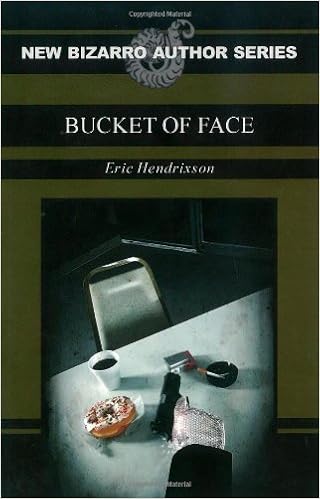
Eric Hendrixson began his career as a not-so-humble member of the Magnificent Seven, the 2010-2011 New Bizarro Author Series, which has become the stuff of legends.

Pictured here killing varmints.

In celebration of Eric's latest novel, Drunk Driving Champion, a bizarro racing adventure evocative of The Gumball Rally and Cannonball Run, I reached out to Eric for a heart-to-heart regarding his escapades.

Let's start with the basics. Tell me how you found Eraserhead Press and/or bizarro fiction in general?

I went to a class on publishing fiction at the library. The instructor worked in fantasy, so she focused on knowing your genre. But I didn't have a genre. I was always the odd man in any writing group I belonged to, and none of the publications out there seemed to publish what I was doing. So after the class, I tried to talk to the instructor about the kind of fiction I wrote, and she said, “Well, I guess you're just bizarro.”

I muttered, “Yeah, thanks,” and left. I don't believe most things people say and assumed she was just fucking with me. I'd done a lot of reading and writing, and I was pretty sure there was no such thing as "bizarro." Still, I spite-Googled it a couple days later and bought the first two Bizarro Starter Kits. The first story I read was The Greatest Fucking Moment in Sports. After picking up a few more books, I knew I wanted in on this. Imagine being a devout Catholic all your life without knowing the Catholic Church existed. Then, one day, while out shopping for printer toner, you stumble into Vatican City. That's what finding bizarro was like.

Back then, there was a questionnaire that Eraserhead had you fill out to see if they wanted to work with you. I filled out the form, and I guess they were willing to work with me. And specifically, it was Donihe who wanted to work with me, which was a big deal because he's the one who got me into this genre. My application was accepted, and somehow, I didn't feel like they were fucking with me. So I wrote a novella for the NBAS, which was rejected (it really was just cyberpunk), and I went to BizarroCon, where I met the bizarros, the first generation of NBAS, and Michael Allen Rose, who was in the NBAS class after me.

We've interviewed Michael Allen Rose before and talked about his unending font of masculinity. Do you feel any kind of generational connection to the rest of the Magnificent Seven or subsequent NBAS groups?

I think of each year of NBAS writers as a graduating class, so there's a community of sorts among people who have had this common experience. It's like a college alumni association except that it doesn't ask you for money, send out newsletters, or officially exist. I was fortunate in moving to Chicago, since we have four NBAS graduates in this city.

How did your year in the NBAS go and how has it affected your career leading up to Drunk Driving Champion?

I started off writing a story about a narcoleptic disc golf player who fights an army of Rickrolling squirrels who turn the White House into a giant Rick Astley. I'd just gotten back from my first BizarroCon and was eager to get this story on paper. It was also November, and I had done NaNoWriMo before, so I got started. The problem was that it was a really dumb idea for a book. It was obviously just wish-fulfillment, so I stopped writing it. In an online workshop with Bradley Sands, I came up with the idea of a doughnut shop worker and his kiwi fruit girlfriend selling human faces around Washington, D.C., while dodging a Michael Jackson-impersonating hit-tomato. That made a lot more sense, so I wrote that book instead. Then I lost the book. I went to a cheap motel in Natural Bridge, Virginia, and rewrote it over the course of a few nights and revised it with Kevin Donihe over a couple months.

Back then, NBAS was more competitive. My NBAS class worked together a lot and supported each other, but it was still stressful. There was a set number of books you had to sell—hard copies, not e-books—to be even considered for future submissions. I think it was a period of character-building. I learned a great deal about marketing, more about what doesn't work than what does. However, selling a book is more than just writing a book, and the year changed a lot of my thinking about writing. Jim Koch, the founder of the Boston Beer Company, once said that there's only room on your coaster for one beer. I'm assuming he meant at a time. Similarly, at any given moment, for a person to be reading your book and not any of the other books out there or that have ever been out there is a pretty big deal. You have to make it worth the reader's while.

Given the short format of the NBAS, how did you convince people to put a little beer on their coaster instead of a big one?

If you have small glasses, serve whiskey.

Tell me about Drunk Driving Champion - the process of writing it and getting it published. Was it always your intended sophomore release?

I pitched this book as a joke. Drunk Driving Champion came out of a month-long anonymous online pitching session with a bunch of Eraserhead authors and editors. It was essentially a pitch workshop gone bipolar. Because of the way the message board worked, all of our ideas either got shut down or were simply ignored. The pitches most recently commented on went to the top while those without comments were buried. That's also how 4Chan works. We'd spend days on a pitch to just get a "nah" or "meh" from the group or for things to be buried and not ever read or voted on at all. In the second week, everyone started getting a little testy. I mostly vented by attacking my own pitches, using language I would never use against someone else. I was getting pretty surly. So full of frustration and beer, three hours after bedtime but ten minutes before bed, I threw together three pitches called "Chainsaw Nunchaku," "Fuck Fucks the Fucking Fuckers of Fuck," and "The Great American Beer Run," which became Drunk Driving Champion. When I woke up, the beer run story had caught on. It was really popular, and Eraserhead accepted the pitch.

So I had to write it now, but as I wrote this story, the characters became very real to me. Because of the risk involved, a person has to have a good reason to participate in a cross-country drunk driving race, so I worked on each character's personality and motivation and let that be the driving force for each character's story. That was something I learned from reviews of Bucket of Face, how people responded to the character-driven plot. That allowed each racing team to have its own story arc. There are no auxiliary characters except for victims along the road, and even they have to be real. Each character in the story deserves a story. I also built on the faster voice that I was developing in Bucket of Face. Don't waste the reader's time. Make things happen. Always escalate. So there was a balance between developing the characters and always moving the action forward.

It's a thing of beauty when a farce turns honest. Tell me about your favorite character in Drunk Driving Champion.

I like characters who act as the voice of reason in unreasonable circumstances. Anita, William's A.A. sponsor, accidentally gets dragged into the race when she gets into his car at the starting line to stage an intervention. After offering support, encouragement, and A.A. slogans for miles, she starts to lose faith in her mission. This is used both to comedic effect and as a form of character growth. Her failure as a sponsor allows her to question a lot of the roles that she's been pushed into, stop being a sidekick, and take the lead role in her own life. There are a lot of characters in the story who are crazier than she is, but she's a sane person in an insane situation. She'd be better off if she were a lunatic.

If you were in a 70's racing sex farce, what would your character drive and would he stand a chance at making it to the finish line?

I'd drive a goat-drawn wagon. It wouldn't be drawn by ordinary goats but by disco goats. My disco goats and I would get to the finish line with the power of music and friendship. Or a Dodge. They made a pretty solid car back then, and you could fit a couple goats in the back seat or the trunk, depending whether or not those damn goats can fucking behave themselves for once. Also, instead of Sally Field, I would have Sissy Spacek as my co-pilot because I think she's a damn good actress. Did you see her in 'night Mother? That was some solid work, and I think that's the kind of person I would need riding shotgun.

And I'd want a shotgun.

I have not seen 'night, Mother, but then Bradley Sands would argue that I've never seen any movies. Is Drunk Driving Champion satirical or absurd?

The ultimate purpose of satire is to preach to people by pointing out their flaws. I think one of humanity's largest flaws is preachiness, so I try to avoid writing too much satire. There are satirical parts, mostly making fun of preachy people, but it's not the book's overall purpose. National Lampoon's Deteriorata and We Drive Drunk by Rucka Rucka Ali are parodies that transcend the subject matter, but most satires and parodies don't. I'd say the book, like most things, is absurd, but absurdity is not randomness. Absurdity has a logic of its own.

What do you have in store for us in the immediate future?

Giving the Finger was in the Bizarro Starter Kit Red, and being in a Starter Kit was one of my goals going into the genre. I'm working on assembling a collection with that story as the tentpole. Essentially, the piece is a retelling of the Little Dutch Boy story. Once the boy has stopped the leak in the dike with his finger, the town has no real incentive to let him take his finger out of the hole. The leak is stopped. And when new leaks spring, it only makes sense to take more body parts from the boy for repairs. I had a lot of fun with that one.

I've always been a fan of anti-comedy, so I wrote a sort of anti-horror novel, a zombie story without zombies, which is on Kevin Donihe's desk right now. As a part of the world-building process, my novels usually have an underlying cosmology. Charles from Bucket of Face was a Fifth Day Philistine. Drunk Driving Champion has an afterlife involving reincarnation and the void. This novel, which will either be called Precious Blood of the Lamb or All Our Future Thursdays, works on a modified Last Thursdayist worldview involving tacos, Thursday being the fifth day and tacos being amazing.

I think "All Our Future Thursdays" is a beautiful title. I'd like to hear a little bit more about that, if you can tell me.

It's the usual boy meets girl, boy loses girl, boy dies, boy tries to win girl back, boy turns into a sheep, boy looks for tacos, girl dies, boy raises girl from the dead, boy accidentally turns girl into a sheep, boy destroys the universe looking for tacos story. And he does this kind of thing all the time, which is probably why the girl dumped him in the first place. I know this description sounds like a typical romantic comedy, but I tried to put an original spin on it.

Last question. If I told you that you had a beautiful body, would you tell me how to live one's bliss?

You would never say that.


Thursday, April 7, 2016

Where Are They Now? Interview with Justin Grimbol

by Pedro Proença


I had the honor and the privilege to interview one of my favorite writers, and all-around beautiful human being Justin Grimbol.

Pedro: Hey Justin! In advance, thank you for the interview! When and how did you get involved with Bizarro Fiction, and the New Bizarro Author Series?

Justin: I got into Mellick first. The Haunted Vagina was my first Bizarro read. Then I read everything Mellick. I would bring his books to work. This was really awkward because of the titles. But I'm a risk taker, a rebel, a go-getter, a Adrenalin junky, so I brought them in anyway. Then I heard about Bizarro Central. I wrote a little blog piece about bringing Mellick to work. People liked it. Kevin Shamel contacted me and asked me to write a book for the NBAS. My first attempt was called THE MINIVAN. It was about a man stuck in an evil Minivan. But it was rejected. It was getting close to deadline. But Kevin wanted to give me another chance. I sent him a bunch of pitches. He had me combine the ideas he liked, then send him an outline. Then I wrote the book in a couple days. Binge writing was fucking blast. I got all sweaty and crazed and excited about life. And tired. It also made me tired. I edited the fucker for a day or so. Then I sent it to Kevin. He told me he wanted to publish it. We worked on it for a couple weeks. He emailed me and told me he wanted more monster fights. I sent him some more scenes with monster fights. Then he said he wanted even more monster fights. So I sent him even more monster fights. Kevin was fun to work with. After the book was all jacked up on monster fights, I flew out to Bizarro Con. I partied hard. Talked about books and danced and didn't shower much. After that I felt thoroughly bonded to the scene.

Pedro: That's incredible! I read some of Carlton's books on the train, and attracted some amused looks myself.
Every story I hear about the NBAS rush reminds me of our class'. We had a really tight schedule, it was nine of us, from three different continents, and we made it work.
What do you think is coming for Bizarro? Do you think it will ever be mainstream? Can you see in your head a Crud Masters movie?

Justin: I think there are Bizarro authors I think will become really popular and maybe even legendary. I don't know about main stream.
I think Pacific Rim is a lot like The Crud Masters. My book had more raunchy sex though. So its better. Also, here's a little secret. My buddy Pete, was trying to get his cartoon Uncle Grandpa picked up by Cartoon Network around the time I wrote the book. But they didn't like it at first. So I asked him if I could put his character in my book. He said I could. So I did. Eventually cartoon network did pick up the series. I doubt they realize that my own version of Uncle Grandpa is in The Crud Masters. Wait, what was I trying to say? Oh yeah. Uncle Grandpa is better than Pacific Rim. Uncle Grandpa is in my book. I also cry a lot. Also, I like to take pictures of trees. Also, my dog as a silky forehead. Also, when I am feeling really sad I watch Star Trek Fan Films and that really fucks with my head. This all has something to do with something else and that's something.

Pedro: I also cry a lot. I cried reading each one of your books, actually. Something about a sensitive fat guy who loves butts really touched me. In the butt.
Seriously, your books triggered reactions in me that maybe no others did.
Which movies/books made you cry when you were first exposed to them?

Justin: Oh I'm a big time sap. I can't watch a Rocky Balboa Training montage on Youtube without sobbing. My favorite movie is Terms of Endearment. That fucking thing will make me weep. Carlton Mellicks Teeth And Tongue Landscape made me cry. The end of Stephen Kings IT made me cry. Jim Harrison just died and that made me cry. Lots of Larry McMurtrys books make me cry. Holy shit, Diary Of a Part Time Indian by Sherman Alexie made me weep forever. Sam Shepard Plays make me weep. There were scenes in Cry Father by Whitmer that made me weepy. The list goes on and on.

Pedro: If someone walks up to you and gently ask you for writing advice, what do you say?

Justin: Read a bunch. Write a bunch. Use adverbs sometimes. Its no big deal. Use the word  VERY and JUST sometimes. Its fun.
Don't follow the writing rules. Walk a lot.
Don't try and be profound.
Have fun and remember its work.
Let me touch your butt.
I would say all that. Then I would touch their butt. Then they would understand.

Pedro: I look forward to having my butt touched by you, Justin.
Thank you very much for this interview :)))

Justin: No problem my NBAS homey. Stay Golden.


Where Are They Now? Interview With Kevin Shamel

by Lee Widener

 This is a real treat. Today I'm talking with author Kevin Shamel. Kevin was part of the first New Bizarro Author Series crew, and also went on to become editor of the series, so we'll gain some insight into how the series began, and how it evolved in the first few years.


LW: Hi Kevin- To start off, how in the world did you find out about Bizarro fiction, and get involved with it? And how did you hook up with Eraserhead Press?

KS: I found bizarro in 2009 when I kept having stories rejected by traditional publishers for being “too weird”, unless they asked me to butcher them into something more palatable for the mainstream. I got tired of making my protagonists and their worlds normal, or fit into the accepted tropes for horror, science fiction, or urban fantasy. I looked online one day for “weird fiction magazines”, as I was of the assumption that writing short stories was the way into the publishing world (something the very approachable, friendly, and longtime hero of mine Christopher Moore set me straight on about the same time I found EHP, actually). I found Eraserhead’s website, read some Carlton Mellick III and knew these were my people.

I actually submitted the last survey they had on their site to determine if a writer was of like-mind and someone they might want to get to know. It was the last one because EHP was going through some changes right when I found them—they’d just come up with the idea for the NBAS, and started the first Bizarro Bunker. Then all sorts of weird “coincidences” happened.

Rose O’Keefe contacted me soon after and told me that one of their writers lived in the same city (Olympia, Washington) as me— Cameron Pierce. She suggested that I meet him. However, by the time we connected (just a day or two later), Cameron told me he was moving to Portland—like right then. BUT, he told me that he had a friend who lived in one of the black houses (it’s an Olympia thing) who was hosting a reading for him and a few other authors. Turned out that house was at the end of my block. You can read about it from Jeff Burk:

 SATANIC DENTISTS IN OLYMPIA!

 In fact, if you read that blog post, keeping in mind that I was the photographer and this was the FIRST time I’d ever met these people, you’ll know exactly why I had to work with them. I had no idea how lucky I was to 1-. See the second Meat Magick (and every other one after that!) 2- Witness Jeff’s Shatnerquake performance, and 3- See CARLTON FREAKIN’ MELLICK III perform in a room with only five or ten audience members—that’s something not a lot of people can say. Hell, the moment they piled out of their car with handfuls of burritos before the reading I knew this was my crew. By the time they’d finished dinner, I’d walked home and got my martini-fixins so we could really get to know each other. THEN they performed. I’d never seen anything like it, and I knew it was exactly my style. Also, I laughed until I hurt.
And that was that. I’d submitted writing samples and links to some of my published stuff and we knew we liked each other. Soon Rose sent me an email introducing me to my editor for their new idea, the New Bizarro Author Series, and we got to work.

LW:  That's quite a story! Who was that editor, and what was it like working with him/her?

KS: Kevin Donihe was my editor. It was weird and good to work with him. I had about 20,000 words written on a book and a couple others I’d started, which he’d read and liked, but about twenty-thousand words was about as big as he wanted an NBAS book to be. So I pitched him some ideas until we had one that we both liked and I went to work on it. Took about a week for the first draft, and then Kevin showed me how to expand the good parts. He’s got a tremendous grasp of language, and knew how to turn what I had into an actual book. It was great, really, all around. But such a new experience for me, and definitely enlightening. Carlton was in charge of the NBAS at that time, and I learned a lot from him about craft and later promotion. I remember the first NBAS series as a team effort from all the staff of Eraserhead Press, really. In that year, I learned more about publishing than I had in the ten that it took me to get to where I was.

LW: Tell us about your NBAS book, and what kind of interesting things you did to promote it.

KS: Rotten Little Animals was inspired by a cat fight in a rainstorm that my 12-year-old neighbor Audrey and I watched from my upstairs hall window. She called my attention to two cats doing some sort of Kung Fu across the street. I shit you not, one cat followed the other that leapt over a picket fence, when a wind-gust slammed him straight through the boards. The freakin’ cat didn’t miss a beat and continued fighting the other in the yard when a huge torrent of rain let-loose. The cats were illuminated in the yard as street lights popped on in response to the sudden darkening of the sky. They just kept going at each other. It was amazing. More amazing was Audrey’s observation. During the fight, a meat truck drove around the block three times. We were standing there, watching this insane thing happen and she said, “That meat truck is ruining the shot.” Immediately I had the idea for an animal film crew at work on a cat fight scene when that stupid meat truck ruined the shot by circling the block over and over—and that scene became the opening of the book.

I promoted the hell out of it. The Rotten Little Puppet Show was born after I spent 52 hours with the help of friends and family creating elaborate sock puppets for the characters in the story. During performances, I’d yell out the craziest scene from the book, making the audience be the puppeteers. Zombie-cat puppets were the favorites.
I took car-magnet stock-signs from an online printing company and turned them into free ads for me which I put all over the internet. I ran giveaway contests, had people make their own zombie-cat puppets, worked on gathering reviews and generally trying to figure out Amazon algorithms (which ended up catching the attention of German publisher Voodoo Press, who have since added quite a few American Bizarro books to their list, but who made my book the first NBAS book to be translated and published in another country which didn’t hurt promotion one bit), played on Goodreads, had a funny animal blog and did stuff on Facebook before it was stuff you can’t do on Facebook or you won’t have friends for long—but it was new, then. I worked my ass off on that book, because I had to sell 200 copies in a year (and that’s a lot harder than one would think). I managed to sell over 250. At that time, the prize was a contract with Eraserhead Press.


LW:  Did you work on any promotional projects with the other NBAS authors that year?

KS:  The first year of the NBAS is very different from the rest. We were totally pioneering stuff—trying things out to see if they worked. And we weren’t as close as subsequent years became. It wasn’t really something we did much, and none of us lived near each other. We tried a few things, but nothing that stands out as a real, working, group promotional effort. Most of us genuinely loved each other’s books, and we cross-promoted as much as we could. Of course, we all kind of considered each other competition, too. We weren’t just competing, but we didn’t know yet what a little family (and therefore FORCE) we could become if we threw-in together more than we did. Happily, the experience welded a bond between David Barbee and I that nothin’s gonna break. I saw that happen a lot in subsequent years between authors of the same series.

LW: How did you go from having an NBAS book to becoming the editor for the series?

KS: Well… Let’s just say some changes happened and I was looking to move to Portland. I had worked very closely with the EHP crew for a couple of years, spending a lot of time at conventions with them and doing performances. I’d done Bizarro Bootcamp, which I won’t really get into explaining other than to say that in the time I was with the crew, I learned how they worked up-close and fell in love with their style and ethics. If I had to work for someone, they were who I wanted to work for. Luckily, they’d hoped I’d ask.

Rose and Carlton took me on to learn editing and layout as well as begin the Bizarro Brigade. I spent a lot of time sitting between Rose and Jeff Burk editing manuscripts and learning from them how to work all the software involved in publishing. Once they thought I had a good grasp, I went to work as an editor for the series, along with Donihe, and was placed in charge of the NBAS authors—answering questions, cheerleading, teaching about promotional stuff, helping them organize things, keeping them up to date with sales figures, all the stuff that I’d been through in their shoes.

I was able to scout new talent and help those authors complete their first books—several times from concept to completion. It was a very fulfilling job. I’m happy to have played a part in so many writers starting out their careers. And heaps of them are doing amazing things today.

LW: You mentioned scouting authors and helping them get them in print. Who are some of the authors that came to your attention that you're glad you gave a shot?

KS: My list of "found 'ems" includes Vince Kramer, Gabino Iglesias, Constance Ann Fitzgerald, Shane Cartledge, Tiffany Scandal, Dan Vlasaty... I believe there are more. There are certainly other people I've published that had already been published in other venues (like Justin Grimbol, Tamara Romero, and Spike Marlowe), and really, Gabino was already writing quality articles for Eraserhead Press dot Com and was an established reviewer/professional freakin' journalist, so it's not like no one else thought he'd make a great bizarro author. I just approached him is all. In some cases I pursued these authors, other cases encouraged them to write books. I'm just happy to have given ALL my writers exposure, however much help I have been.

LW: You worked with Kevin Donihe as co-editors. Was that ever confusing- Kevin and Kevin?

KS: Kevin and I were referred to among staff and authors as, Donihe and Shamel. Sometimes The Kevins. Never Kevin Squared, and that would have been cool. Damnit.

LW: What did you learn from working as an editor for so many different writers?

KS: I learned how to be a better writer, that’s for certain. I learned how satisfying it is to see something in someone’s story that they haven’t yet, and to help them make it blossom. I thought I’d already learned the value of being succinct, but seeing its opposite reflected in others’ writing made me pay more attention to using fewer words—I was also a sort of acquisitions editor, receiving at least one query a day (usually more), many with attached novellas, I saw countless examples of not-great writing. I learned to write in different styles as well, however, having such a wide variety of authors and to appreciate the uniqueness in every writer’s voice. One of my favorite things was editing a scene or paragraph and matching the changes with the rest of the story—almost putting myself into the writer at the time he or she wrote it. Or just steering them toward the outcome that made the story even better than I could have thought. I learned that I have a lot of favorite authors. I think also, I learned how to be an editor. It’s not a job or working relationship, it’s a friendship. You have to really cherish the authors you take on. You have to respect each other, and work well together. I love all the people I worked with. ALL OF YOU!!!!

LW: From your experience as an editor what can you tell someone interested in writing Bizarro, about what NOT to do?

KS: Don’t jump in thinking you know what bizarro is without learning what makes the genre a genre. This is really the only solid, lasting advice I can give. But here’s some that might still apply: Don’t tell an editor that you’ve just written the first/best/only/greatest story about __________. Don’t get an editor’s name wrong—no Ms. or Mr. unless you know for certain, no Kalvin Dondalhees, Gareth Kochs or Dudes (especially to female editors and unless you’ve talked to that editor before or shared a joint in the least). No talking dicks. I know that last one is a joke by now, but it’s not a fucking joke. NO TALKING DICKS. Don’t assume that because your book has messed-up sex, a bunch of explosions and is as politically incorrect as possible, that it’s something for bizarro editors to slobber over. No vampires either, unless they’re better than Dargoth Van Gloomfang, which they can never be. (I’m actually not the one who can say so now, maybe vampires are fine with current editors, but not talking dicks, I know this will never be okay.) But if you don’t know the vampire I just referred to, your chances of getting bizarro right just got slimmer.

Misogyny is unacceptable in bizarro. Actually, any sort of limiting of people as individuals is. If you’re not making fun of it, calling it out as the horrible fucking thing that it is in the world, and saying how much it makes you want to puke, try somewhere else. Bizarro is an open movement—all-inclusive, unlimited, everyone-friendly. We don’t like people treating people (or animals) badly. Don’t try and sell stories about talking dicks, and don’t BE a talking dick—that’s some pretty standard, long-lasting advice.

LW: And what SHOULD they do?

KS: They should read bizarro. They should read it from its beginning to its current incarnation. They should know who the big authors are, and why they are the big authors. They should attend performances, readings, workshops and conventions with bizarros. They should meet the people they want to work with, if at all possible—which is at least possible through social media. They should know who they want to write for and why. They should become acquainted with the various presses, and what they publish. They should be aware of the press’s history, their standing in the publishing industry, their policies. They should read what people say about them as well as what they publish. Research and understand the market. Be polite.

And then submit a great book, idea, pitch, or story to an editor. Make it the best you can before you send it. Make it bizarro: Weird characters in weird worlds with weird problems or whatever story device with which you’re working—just keep it weird. Remember that short story collections aren’t that attractive as a first book, for readers or editors. Remember also that for every twenty brilliant ideas that no one has ever thought of before, only one or two will actually be original enough to pass as original, and they might not be anything an editor wants to spend time on. Just keep trying until you hit the right one.

Keep writing.

LW: What's been going on since you stopped editing for the NBAS? I know your life has been through some pretty major changes.

KS: That was three years ago now. I’ve been splitting time between the US and Australia—lately mostly Australia (where I live with my lovely Australian wife, Anna). I’m working on getting a visa that allows me to work here and come and go as I want, so I can split more equal time between the two places and see my kids more. It’s proven a bit of a task, but we’re working on it. I’ve been keeping busy with four stepkids, our new dog, battling in-laws, mourning dead spiders, spending time outside, working the now-harvested garden, getting this latest book of mine all prettied-up, and all the weird projects I’m working on. I’ve been producing things, but I’m not yet able to sell them anywhere, so I’m saving up my new lines of products for when I can hit craft fairs, launch websites, etc. I’m making zombie cat sock puppets. I’ve been playing fashion re-designer and have a line of hand-sewn clothing I’m calling, Punked Up Clothes. I taught myself lost-wax casting a couple of years ago, and I’ve been making fine silver jewelry using stones that were my dad’s or that I’ve found. And of course, I’m writing. Always writing.
LW: You have a new book coming out soon. Tell us about it.

KS: I’m very excited for this one. It’s called, Not Safe For Kids, coming out this month! It’s an illustrated children’s book for adults. It’s full of bad advice, wrong facts, and confirmation of childhood fears. I tell people it’s like if you left  your kids with your drunken brother who lives in your mom’s basement who you had to use as a babysitter in an extreme emergency when not a single soul, even that guy you sometimes see sitting by the dumpster talking to himself, could watch your precious little ones and he told them “the fuggin’ TROOF, more or less, damnit, are you gonna pay me for this or what, only two outta three are cryin’ or hurt”. Or as my son said, when he was eight, and I read it to him aloud, “Can you imagine if actual kids got a hold of it?”

LW: Your book's cover and interior art are by Jim Agpalsa. Tell us about working with Jim. What was your process like? Did you just give him the manuscript after it was completed, or was it more of an organic process?

KS: This book is by both of us.

I awoke at 4AM one day and starting writing. By 10:00 I had the text. I went out and had a smoke, and imagined the first little entry illustrated. I went back inside and emailed it to Jim, asking if he’d be interested in drawing it, and then if maybe he’d consider working with me on a whole book like it. He said he liked the idea. The next day he told me that he’d read the story to his young daughter and she asked if it was true. He said, “Yes.” I knew that we’d make a great team. (I already knew that, anyway. Jim’s illustrated some shit for me that hasn’t been published yet. He’s a great artist, and anyone is lucky to have him on their creative team. He’s also a really good person, and super cool.)

I sent him what I’d written and he turned it into GOLD. Seriously, without Jim’s illustrations, this would not be a book. With them, it’s magickally wicked. I think he and I make a fabulous team. He took my mean little entries and translated them into gorgeous illustrations. The cover is a colorized version of one of the interior illustrations that Jim reworked a bit. This is a truly beautiful book, and I’m seriously proud to have a hand in it.

I was allowed to go crazy with the interior design and layout of this book, and I had an amazing time pushing myself into new things with the coaxing of my publisher and final editor on this project, Rose O’Keefe (who also designed the cover). I hope people like it.

At any rate, this couldn’t have happened without Jim’s amazing art and us being in synch with each other. I’m hoping we can bring similar things into being in the future. Jim is a good friend, and a great pleasure to work with. Also, one hell of a fantastic artist—check him out all over the Bizarro world.

LW: This has been a blast, Kevin! Anything else you'd like to add?

KS: I’d like to thank you for thinking of me for this interview series, and for asking such great questions. I hope I didn’t go overboard in my answers. Best of luck to you, Lee, in your future publishing life. And to all of the NBAS authors. I know how tough it is. I also know you can do it.

CHECK OUT KEVIN'S BOOKS ON AMAZON!

OUR INTERVIEW WITH ARTIST JIM AGPALZA


Thursday, March 17, 2016

Portraits of Bizarro #1: Artist Jim Agpalza

by Lee Widener


This is the first in a series profiling prominent figures in the Bizarro community who are not authors. First up is Bizarro artist Jim Agpalza, who has done many book covers for Eraserhead Press, including two of this year's New Bizarro Author Series books; my own "Rock N Roll Head Case" and Chris Meekings' "Elephant Vice."


LW: Jim- Some of our readers might not be as familiar with you as they are with the writers in Bizarro. Can you give us a little info on your background- where you came from, art training, etc.?

JA: First of all, Hi Lee and readers! I come from a tiny sugar plantation town on the north shore of O'ahu, Hawaii. I was raised but never baptized as a Jehovahs Witness. I used to draw flip book cartoons of little stick figure people getting crushed by giant boulders or shot down by jets or spaceships or an explosion of lava from a volcano all on the pages of my JW bible or other JW publications. As for art training I'm mostly self-taught. When I did art in school my teachers just left me alone. I took a couple of art classes at the local community college when I moved to Portland, and again was pretty much left alone to my own devices.

LW: Has your work always been so deliciously twisted?

JA: Aww thanks. I'd like to think so, but I doubt it. There was a good chunk of my childhood drawing lowriders and dinosaurs and Superman and Garfield and other safe comic book stuff. My mom told me that the first drawing I did for her was of a man falling off a building. Comic books are actually the gateway to my twisted stuff. I'd always see hints of nipples on the costumes of the lady characters, and as a kid they'd always give me chubbeez in my undeez. I thought if I could make my own art- porn that I could masturbate to I'd be the envy of all of my male classmates. I then had to learn how to draw nipples. We didn't have the internet in the early 90's so I had to glean everything about the female anatomy from R rated movies and porno magazines, and once that door was opened I was pretty much a fat kid in a candy store screaming for DIABETEEZ FO MY UNDEEZ! From the porn I learned about the male anatomy and where things went. Soon kids at school were asking me to draw sexually explicit pictures to jerk off to. It took a while, but I eventually got bored with sex drawings. From there things got weird.

LW: Do you have a particular outlook or philosophy behind your artwork?

JA: I strive to make something that hasn't been seen before, and to make it look good as I possibly can. Which Bizarro has given me ten-fold.

LW: Do you have a particular medium you prefer to work in, or do you have a large bag of tricks?


JA: I started out with no.2 pencils and crayons to pen and ink to oils and acrylics. I'd have to say oils are my jam. I grew up on Bob Ross. It always blew my mind as a kid to see him scratch his pallet knife full of paint on the canvas and shwip shwip you've got a mountain. As a kid I watched this and knew this is what I have to do. I wanna go shwip shwip and make a giant vagina! For the book covers and illustrations I've been solely using digital.

LW:  When and how did you get into doing book and magazine illustration?

JA: One of my closest and oldest friends(Gaetano Evangelista) and I did an animated short for Tony Clifton where he murders a guy and diddles with his severed cock.

LW: WHOA! Hold on there! You just went from drawing pornographic cartoons for your friends to doing an animated film for Tony Clifton! Can you fill in the blanks a little bit??

JA: Yeah, years went by between drawing porn for friends and Tony Clifton. When I say I got bored drawing porn for friends it's because their ideas of porn were so boring and not Japanese enough. I mean they never wanted to add anything to it. It was always straight up porn, no tentacles or animals or something I deemed interesting. At 16-17 I felt drawing nudie pics needed something for it to pop, and at the time I just didn't know what or how. It took years of messing around and experimenting to get to where I wanted to be. I took up painting and got obsessed with color and technique, and all the masters and their works. I'd try to incorporate some of the ideas I'd seen from Bosch, Dali, Goya and Van Gogh. It's still an ongoing process. I'm still learning from them, but now I'm influenced by comic book artists too. The big two I try to steal from are Junji Ito and Robert Crumb. I could cum just from their cross hatching. Movies were a huge inspiration too. The biggest influence for me was Sergio Leone, Igmar Bergman, Fellini and Kurosawa. I was in my own world, developing my own style.


I painted a picture of Marilyn Monroe whose face was half melted, helping a goofy Jesus off the cross with the help from a tiny Hitler holding up my Darwin fish(a fish with legs, the front legs has hooves and the back legs has hands for feet and a monkeys tail) which was suckling on Jesus's teats. I have to say this painting gave me months of giggles. A friend of mine was getting married, and wanted a painting from me as a wedding gift. After some reluctance I finally did one. It was of my Darwin fish and a half man with a Hummingbird head and a dead astronaut holding up a Japanese flag. A mutual friend saw the painting and became obsessed with turning it into a cartoon. And there my friends, is the birth of Spacefish. After some convincing, we started work on it. I painted all the characters, and my partner started on background collages. We had like seven minutes worth before we kind of gave up. At that time my partner started to work the lighting at Tony Clifton shows. Wha???? Yeah, he's badass. He somehow convinced Tony to let us animate a segment of the show where Tony went off on a story during one of the songs. I think you can find that video on YouTube I think it's called "Tony Kills A Man". I'm not sure, but I think Tony still uses it in his live shows. It's fucking awesome.


 With the money from that, we got interested in doing a full length episode of something we had both been working on earlier which turned out to be Spacefish. We had done some clips of it (pre-Clifton) where all the characters had been hand painted in oils by me, which took a really fucking long time, then the animation alone and the computer rendering shit took forever. I had done the Clifton stuff entirely in primsicolor which was faster but murder on my hand and wrist. So when we got a producer and some funding to do Spacefish proper we got a bunch of cool equipment like an office in the pearl district downtown. We got other artists and writers and computers....and (cough cough) other stuff. I got a Wacom to do all the characters digitally which sped things up nicely. The writers turned out to be the power couple Cameron and Kirsten Pierce who Simon Ore our producer is a huge fan of and of the bizarro genre all together. I worked at the office when I could, and I got to witness these geniuses work on their craft. There were all these cool looking books lying all over the place in the office and I begged Cameron to let me do a book cover. I always wanted to do a book cover, and Cameron and Eraserhead finally relented. From there I've been involved ever since.

LW: What was the first cover you did for Eraserhead Press, and how many covers would you say you've done for them?

JA: The first cover I did was Unicorn Battle Squad by Kirsten Alene. I think I've done around twelve more or less including the one I did for various imprints of Eraserhead.


LW: I know for my book, "Rock N Roll Head Case" you didn't read the book before you did the cover, yet you captured the spirit and essence of the book perfectly. What's the process like, creating a cover for a book you haven't read? How much guidance do you get?

JA: Sometimes it's pretty easy. The writer or editor will send me a description of what they want, and I'll try to come up with something that's as close as I can get to in the description. Sometimes it's a grueling back and forth where I end up yelling at my wife and kids, and punching the couch cushions. And tons of crying in the fetal position in the shower as blood from my ass flows into the drain. Most of the time it's pretty easy and fun! Rock N Roll Head Case was fun to do because I got to draw Alice Coopers head! His face alone was such a joy to draw with the backdrop of the cosmos and psychedelic colors and Andre the freaking Giant. I was sold.

LW: Do you have a preference for one type of output over another? Do you really like doing animation, or book covers, or commissions, or the freedom of just letting your imagination run wild?

JA: I like doing it all. Like everyone else, I feel like my balls tighten up nicely when doing my own stuff. I'm also a level 3 guitar and bass player.

LW:  Do you have an online gallery or website where people can see more of your work?

JA: Yes, I have a blog where I haven't updated in a while at JIMAGPALZA.COM .
I also have a redbubble where you can get my stuff on things and shit.
Jim Agpalza on Redbubble


LW: Jim, this has been FANTASTIC chatting with you! I love your artwork, and I hope everyone else will find it as compelling as I do. This is truly Bizarro in spirit and form. Let's finish this profile with one more image. Thank you!


Saturday, February 13, 2016

Where Are They Now? Interview With S.T. Cartledge

by Lee Widener

Shane Cartledge is another writer that I first became aware of from working on The Bizarro Zombie Anthology That Wouldn't Die. His story of a zombie choo-choo train was one of the most original concepts in the book, and is indicative of his uniquely weird outlook. Here's a bunch of stuff I asked Shane, and a bunch of stuff he said in reply.


LW: How in the world did you get started writing?

SC: I've always been creatively inclined in one form or another. I grew up learning classical guitar and piano. I reached a limit there with the skills I could learn versus the practice and dedication to the art. Then I started playing around with music production using some very basic programs. That was where I started connecting with people online, and when my interest in making music waned I turned to writing. At that point I had just discovered H.P. Lovecraft and Palahniuk and a few other writers with a lust for violence and madness. That fed back into my own writing.

LW: Was it always weird shit?

SC: I don't think it was always weird. Before Bizarro I went through a lot of phases before I found my voice. After my terrible imitating Lovecraft phase and imitating Palahniuk I kind of got into steampunk. I read a small selection of steampunk books and tried writing one for my first NaNoWriMo. I was fascinated by cyberpunk and all the different offshoots of steampunk, and shortly after, I started reading manga and watching anime, and shortly after that, it was Bizarro.

LW: When did it turn weird, and why?

SC: A writing friend of mine came across Carlton Mellick's short story 'Candy Coated' online on Vice. She shared it with me knowing that I loved weird stories. I read it, loved it, found a few Bizarro titles that I liked, looked up a ton more, and I instantly knew that it was crazy weird and crazy fun. The first two books I bought were Satan Burger and Lost in Cat Brain Land. I read those in a day each and I scrambled back online for more. The more I read, the more I shared on Facebook. Some of the Bizarro authors I'd been reading connected with me on Facebook, and then I thought maybe there was a future in this for me.

LW: And how did this lead to your NBAS book?

SC: I started reading the NBAS from the second year. I read the details online and spoke briefly with Kevin Donihe about it. I had been working on a couple of stories and I had done a couple of online workshops to get more involved. I was doing a workshop with Garrett Cook which included a thorough description of the sort of process that Kevin Shamel was looking to go through to recruit new authors. Specifically, he wasn't after finished books, but high concept pitches which could turn into popular books. House Hunter was one of a whole bunch of ideas which made the cut. A lot of the first draft of House Hunter came together during that workshop.

LW: You mention taking a couple of workshops online. Who else did you take a class from in addition to Garrett? What are some of the things you learned in the workshops that you think helped you as a writer?

SC: I've taken three online workshops all up. One with Jeremy C Shipp, one with Garrett, and one was with Garrett and Bradley Sands. I think the biggest thing you can learn from a workshop is that you need to put the time and effort into writing if you want your writing to go somewhere. I feel like there's no big secrets to being a writer, there's just learning processes. Exercises help to motivate, and having mentors reading and commenting on your work is good preparation for what you need to do to make your writing stand out, and gives you some preparation for what it'll be like when it comes time to working with an editor. Writing is a solitary act, but when you take your manuscript to a potential publisher, it's good to have some support already, and knowing that finishing the manuscript is only the first step in a process that requires a lot of hard work.

LW: So tell us about your NBAS book House Hunter, and what it was like writing it.

SC: I feel like other bizarro authors probably get this a lot, but when House Hunter came out, I'd tell people it was a story set in a world where houses are living people, and one of the first things they'd ask in response was 'where do you come up with that?' or 'what made you think of that?' To me, these ideas may grow subconsciously from real things, but on a conscious level, they're born in a vacuum. I had the idea of setting an Alice in Wonderland inspired (and Nausicaa of the Valley of the Wind inspired) action adventure story in that world and it came together and I sent it to Shamel. Then came the edits. And I realised how much work there was left to go. At the time I was finishing up my degree and starting my honours thesis, and I think that pressure drove me crazy but I think it was necessary to get the story over the line. Day of the Milkman was a dream compared to that.

LW: Kevin Shamel was your editor?

SC: There were six NBAS authors and Kevin Shamel had five of us. Kevin Donihe had Gary. Shamel was great to work with, very supportive, great to talk to. He understood it all because he'd been through it.

LW: You mentioned that Kevin Shamel wasn't looking for manuscripts, but instead was looking for pitches that could be developed. What was that process like- moving from pitch to finished manuscript?

SC: You need to pitch the right thing to the right people or they won't care. It's important to think of your idea as a product, as a finished book, how it would stack up in the current book market. If you can't do that, it'll be a struggle to sell your book. But then you can find that pitch at any point when writing a manuscript, so really, each to their own, I guess. I think it is a process which helps focus your writing and gives you a clearer target in mind. I've had a lot of pitches floating around for a while now, and sometimes I take a few of them and blend them together, borrow ideas from one story to another. I don't get hung up on making this idea work if it's not coming together, and if it might fit better in a different scenario.

LW: What effect has having a book in the NBAS had on your life?

SC: It's opened the doorway to so many wonderful opportunities. I've met some fantastic people, shared some fantastic moments. Bought and read some amazing books. Got some free books from friends. Learned so much about writing and publishing. The NBAS feels like a faint glimmer of what your true potential can be. It's just there waiting for you to realise that the only difference between you and that other person is the amount of effort you put in. It's given me the permission to be ambitious, even if I fail one day, there's so many opportunities just waiting for people to take them.

LW: You live in Australia, but you came all the way to Portland for BizarroCon that year. That takes a lot of commitment.

SC: Connections and inspiration are the main things I took away from BizarroCon. I'd have to say knowledge was another big thing. There are so many crazy smart people there who got to where they are because they really knew their shit. I was a shy young author at the time, so I feel like I didn't make the most of the opportunities I had to really get to know people and form those stronger bonds, but years down the track, those bonds have become stronger and the insight and information I've gained have been a trickle-down effect. I'm constantly learning things, and it's brilliant. I just try to tiptoe carefully through the small press landscape, hoping I don't commit some tragic faux pas which will lead to my immediate career suicide.

LW: Did living in Australia present any special challenges either in the creation of your NBAS book or the promotion? Do you feel at all cut off from the Bizarro community, and if so, what have you done to counteract that?

SC: In the creation of the book, no. Promotion, yes. Do I feel cut off from the Bizarro community? Absolutely. I won't lie. It's rough. I met all these amazing people, and I've never seen them since. Some of them I talk to all the time. And I've made a lot of new friends since then. You talk to all sorts of different people online, you get a feel for who you click with. I tend to focus on that. Nurturing relationships with the right people. There's a lot of people I'd love to know better, and I probably would know better if I lived locally. And I'm still trying to figure out this promotion thing. That's the hardest thing I feel, not just about the NBAS, but about being a writer in this moment. It takes a lot of hard work. And not only that, but you need to be intuitive, to see the literary landscape for what it is and know how to tackle it so that you reach your readers. I'm always trying to write new books and trying to keep momentum going, build professional and personal relationships, keep my mind off missing the face-to-face contact I had at BizarroCon, and build a local presence. The hardest thing I've found is getting out into the real world and connecting with people in my home town. I'm getting there though.

LW: I have followed your efforts to promote your work at large book fairs in Australia with great interest. How did those events go for you, and do you have any ideas for other authors who might want to try similar events?

SC: I've done one major convention, a book launch, and a large toy/hobby fair. The convention and the fair were tough. The convention went pretty well due to the sheer number of people, but I feel like I'm yet to really harness the rabid nature of that demographic and pull them into buying bizarro books. I've been thinking about it a lot recently, how it feels less like some guy chasing his publishing dream and more about pushing my particular brand of fiction as a business. I think that will be the fuel that lights my fire going forward. Definitely the best event of the bunch was the book launch. I pulled in the right crowd, and sold more in one evening than I did in two full days in front of thousands of nerds, or than I do in many months of online sales. I think going forward, my advice would be to consider yourself as a brand, know your product and how to sell it. Keep it simple, and if there's not enough cool stuff on your table, find out what you need to bring people in and get it.

LW: What about life post-NBAS? What else have you published, what's on the horizon?

SC: I've published another novella through Bizarro Pulp Press, Day of the Milkman, which was received quite well. I recently self-published a poetry collection, Beautiful Madness, which has been doing awesome for me. I also had a novelette in the Strange Edge anthology, the Four Gentlemen of the Apocalypse. On the horizon I've got two manuscripts with two publishers at the moment. One is a trilogy of narrative poems and the other is a project I've been working on for the past 2-3 years. I usually struggle to define it, but it'll be my next novella/novel, and I once described it as 'a sprawling sci-fi/fantasy prose poem sort of thing, set in a giant enclosed city, following a gang of cyborgs and children as they fight lizard monsters and cosmic gods.' I think that's the best summary I've come up with to date. It's gonna be epic. I've also got a bunch of other projects and ideas floating somewhere in the pipeline, and I've got plans and hopes for working with a bunch of different publishers over the coming years, and I'm currently trying to start my own publishing endeavour, but I'm keeping that pretty quiet for the moment, until I'm ready to make that move in the (hopefully) near future.

LW: What about music? Is that still a part of your life? I took lessons briefly from my sister, who was a piano teacher, and I'm still sorry I didn't keep up with it.

SC: I don't play much any more, but I occasionally collaborate with musicians and I'll probably do a few projects in the future which will find their way online. If I can get my own piano some time in the next few years I'll probably pick back up on my music as a hobby. I think that'd be a good thing to be able to step away from the work of writing and the day job and the other life-things which have been taking up so much time of my life this year, which I know will continue well into the years to come. Life is busy, but life is good. A piano would be a good way to soothe the mind and break away from that hectic buzz.

LW: And now for the question I've been waiting to ask. It's certainly the most important topic, more important than than all this boring writing stuff. Have you ever been attacked by a dust bunny, and if so, how did you defeat it?

SC: Are dust bunnies real? I haven't been attacked by a dust bunny. Drop bears though... I was nine and camping when one fell on my tent. I had to fend it off with my emergency spoon. I think he regrets it though. He sent me a friend request on Facebook the other day. I haven't responded yet.

LW: Really? Dust bunny attacks in the USA are reaching epidemic proportions. Perhaps we should all move to Australia. Those drop bears sound terrifying though. Thanks very much for your time, Shane!

Tuesday, January 12, 2016

Where Are They Now? Interview with Jamie Grefe

by Michael Sean LeSueur


MSLS: Who/what are some of your favorite books and authors?
JG: I always benefit from the works of E.M. Cioran, Eugene Marten, Robert Coover, Stephen Wright’s Going Native, Hamlet, Macbeth, The Water Cure, Nathanael West, Stephen Graham Jones’ The Last Final Girl (among others), William T. Vollmann, Samuel Beckett, Blake Butler, Grace Krilanovich, Cornell Woolrich, Lee Thayer (the theorist, not the mystery writer), Martin McDonagh, David Ohle, John Hawkes, Barry Malzberg, Gordon Lish, Georges Bataille, Gary J. Shipley, and most recently the theory of Eugene Thacker and the fiction of Thomas Ligotti. I suppose those would be some favorites as of late.

MSLS: Where did the idea for “The Mondo Vixen Massacre” come from and how did you pitch it?


JG: The idea for TMVM came when I didn’t talk myself out of writing a book full of truly excessive ultra-violence, a book that I felt I needed to write, a story I needed to tell and it was one of the best writing experiences of my life. Then I honed it, sent it to one of the editors of “The Bacon Review,” the masterful Eric Westerlind, for feedback, which helped tremendously. When I felt it was ready I pitched it through a formal query letter with the attached novella and Kevin Shamel accepted it and handed it over to Spike Marlowe for further polishing. Prior to pitching it, of course, I spent time with a host of Eraserhead Press and Lazy Fascist books, just familiarizing myself with what kind of frame could entail a slice of Bizarro. In that sense, I did shape the book to escalate in ways that seemed fitting to the movement, while keeping those escalations organic to the story.
MSLS: What went into writing TMVM? What was your process?
JG: I used Freytag’s Pyramid for the first time, watched a ton of movies to study how their plots unfolded, and made a kick-ass playlist that would drop me in the zone. Caffeine helped, too.


MSLS: I know you spent a good period of time in South Korea, Japan, and China doing a variety of things… including  teaching, translation, and even assistant directing and video editing for Japanese television. How have these experiences influenced your writing?
JG: I spent ten glorious years living overseas. That time abroad kept me slippery on my toes, not to mention I had to struggle against communicating (or miscommunicating) in different languages everyday, both personally and professionally. I’m sure the daily intensity of living in a foreign land has fueled, confused, split-apart, and, in ways I just can’t seem to pin down, manipulated my imagination. I’m from the backwoods of northern Michigan, so learning to adapt to densely populated foreign cities took a certain amount of mental rewiring. I also lived for some time in a small Japanese town that was just as bizarre, but in a totally different way--not quite as heavy as Takashi Miike’s Gozu, but still truly singular in the differences. I miss wandering around the streets at night in a foreign language.
MSLS: How was TMVM received? How has your career been affected by TMVM?


JG: I think it went over quite well, despite the fact that it’s completely ridiculous and gratuitously violent. A lot of people enjoyed the language of it, which I’ve thanked my tongue for.

MSLS: What are some things you’ve worked on since? I know you just had a successful crowdfunding campaign for a film you wrote called “Unfinished Business”.


JG: I wrote a couple books for Jordan Krall’s Dynatox Ministries, which was a joy, because those books, I feel, are conceptually a lot stranger than TMVM--more controlled and hallucinogenic and fit well with what he wanted. I wrote a novelization for Tim Heidecker and Gregg Turkington, two comedic geniuses, as well as a strange Japanese-minded Sci-Fi book for Rooster Republic Press. Beyond that, I did some work for Jim Wynorski, contributed to two anthologies, and, yeah, collaborating with director Jay Burleson with “Unfinished Business” was (and is) awesome and I can’t wait to show the public what we’ve cooked up. It’s pure horror. We successfully crowdfunded the film and following the inner workings of the pre-production process as the film gets close to shooting is a thrill. I believe it’ll start shooting in January.
MSLS: What are you working on now?
JG: I just finished up an untitled Sci-Fi Thriller Solaris meets The Shining screenplay that I hope to option or sell. Otherwise, I’m preparing another screenplay right now and working on a collection of essays on horror for my MFA in Creative Writing program. I also finished two interrelated novellas that are unlike anything I’ve ever done, but they’ve been stuck in a particular publisher’s slush pile since early October. If any publishers would like a PDF, get in touch.


MSLS: Any advice for those wanting to write bizarro?


JG: I’m sure others have said this better than myself, but write what you feel compelled to write and always strive to write better. Also, work on finishing projects, whether it’s a short story or a novel-length project. Finishing a project really gives you a sense of what it actually feels like to complete something. Once it’s completed, you can focus time on making it better. Your work can always be better. Finally, read widely and savor the rotten fruits of life.


BIO:


Jamie Grefe is a writer dilating the realms of the bizarre, the darkly comedic, the surreal, the horrific, and the cinematic. His first book, The Mondo Vixen Massacre, was published in 2013 by Eraserhead Press. It has been described by author Stephen Graham Jones as, "...the beating heart of the action movie always playing in the back of all our reptile brains." Grefe is also responsible for the novelization of Tim Heidecker and Gregg Turkington's Adult Swim web-series DECKER: CLASSIFIED, published in 2015 by Heidecker Publishing. His work appears in such venues as Birkensnake, The Bacon Review, New Dead Families, elimae, Prick of the Spindle, Sein und Werden as well as Bizarro Central. His latest book, Domo ArigaDIE!!! is available through Rooster Republic Press. Grefe is a graduate student in the New England College Master of Fine Arts in Creative Writing program and currently lives in northern New Mexico. His website is: http://jamiegrefe.com or follow him on Twitter @ShreddedMaps